


How to Pass a Soccer Ball
How to Play Soccer For Beginners



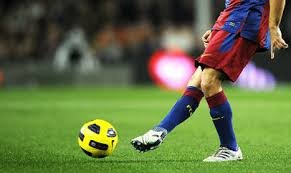
How to Pass a Soccer Ball
Passing the ball means kicking it to your teammate. Along with dribbling, passing is one of the most important skills in soccer as it occurs very frequently throughout the game. By passing the ball, a team rotates the possession among its teammates.
A pass can either be grounded or aerial. It can be short or long. Depending on the situation, different types of passes are executed. However, the short grounded pass is the one which is used most frequently as it is easy to execute and receive.
Technique
The most basic technique employed in passing the ball is using the inner side of the foot, as shown in the picture. The area marked by the red circle shows the surface where you should make contact with the ball while passing. This is because the large surface area of the side of the foot makes it easier to get a full contact on the ball and hence deliver the pass accurately. Accuracy is the key in passing , as a misplaced pass can give away the possession to the opponents. Also, remember to follow through. Following through means that once you have kicked the ball, let your kicking foot continue to move in the same direction for a fraction of a second. Do not just touch the ball and stop the movement of your foot. This improves the accuracy and makes for a steady pass.
How to Practice
You can either use a wall or any object that will rebound the ball towards you once you kick at it. You can practice this passing drill with a friend, but since this guide is focuses on individual practice, we would recommend you practice using a wall or some kind of barrier like a garage, fence, etc.
Here is what you do
Important Tip : Use both your feet to practice this drill. Using your dominant foot might be easier but not utilizing your weaker foot can have negative consequences in your overall game. Always use both your feet to practice any soccer drill.
Practice Objective
You should continue practicing this drill till you naturally feel comfortable using both your feet to make a pass. One hint that you are comfortable doing this drill is when you are naturally able to practice without having the need to look at the ball. If you find you are able to keep your head up and make more than 10 continuous passes using both feet (in all 20 passes), then you have achieved your objective.
Practice Duration
A 15 minutes practice session should be sufficient.

 Get comfortable heading the ball
 How to Receive or Trap a Soccer Ball Without Pressure
 How to Pass a Soccer Ball
 How to Dribble a Soccer Ball
 Understand throw ins
 Be original and spontaneous with your playing style
 Taking Your Game to the Next Level
 How to Improve Your Vision in Soccer
 Know the positions of soccer
 Understand offside
 How to Receive or Trap a Soccer Ball With Pressure
 Know how to shoot
 Test your English Language
  Rules to play Parachuting
 Save Electricity
 Natural Beauty Tips Rules to play Checkers
 Google Search Tips Rules to play Rock Climbing
 Tips to succeed in Love Tips to Get Rid of Stress Naturally
 Teachers Day Benefits of Brussel Worst Body Language Mistakes Job Seekers Make Baby Care Tips Rare Celebrity Pre Fame Shocking Photos Ekadashi Most Famous Fictional Robots of All Time
 New Hairstyles For Girls
 New Hairstyles for Men New Lotus flower Tattoo Designs