


Civil War
Abraham Lincoln



Civil War
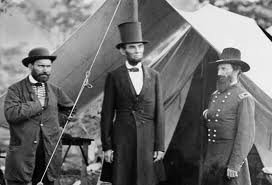
Abraham Lincoln responded to the crisis wielding powers as no other president before him. He distributed $2 million from the Treasury for war material without an appropriation from Congress; he called for 75,000 volunteers into military service without a declaration of war; and he suspended the writ of habeas corpus, arresting and imprisoning suspected Confederate sympathizers without a warrant. Crushing the rebellion would be difficult under any circumstances, but the Civil War, with its preceding decades of white hot partisan politics, was especially onerous. From all directions, Lincoln faced disparagement and defiance. He was often at odds with his generals, his Cabinet, his party and a majority of the American people.
The Union Armys first year and a half of battlefield defeats made it especially difficult to keep morale up and support strong for a reunification the nation. With the hopeful, but by no means conclusive Union victory at Antietam on September 22, 1862, Abraham felt confident enough to reshape the cause of the war from union to abolishing slavery. He issued the Emancipation Proclamation on January 1, 1863, which stated that all individuals who were held as slaves henceforward shall be free.
Gradually, the war effort improved for the North, though more by attrition than by brilliant military victories. But by 1864, the Confederacy had hunkered down to a guerilla war and Lincoln was convinced hed be a one term president. His nemesis, George B. McClellan, the former commander of the Army of the Potomac, challenged him for the presidency, but the contest wasnt even close. Lincoln received 55 percent of the popular vote and 212 of 243 Electoral votes. On April 9, 1865, General Robert E. Lee, commander of the Army of Virginia, surrendered his forces to Union General Ulysses S. Grant and the war for all intents and purposes was over.

 Childhood
 Political Motives
 Political Success and Strategies
 Reelection in 1864
 Assassination
 Entering Politics
 Political Ambitions
 Bid for the Presidency 1860
 Taking Political Risks
 A Constitutional Moral or Local Issue
 Growing Up
 The Civil War Ends
 Test your English Language
  Tea Types
 Cut Throat Pool Game
 IBPS Exams Best Beaches
Mind Blowing Indian Mehndi Designs
IBPS Exams Best Beaches
Mind Blowing Indian Mehndi Designs Benefits of Coriander
 Tips for Perfect Reception Party
 Step to finding your perfect man Most Famous Fictional Robots of All Time
 What to Eat in Uttar Pradesh Ways To Save Money On Your Dream Wedding
 Human Body Facts Ideas to Improve your Life Things That Men Think Women Can Never Learn
 Natural Beauty Tips Oldest People To Accomplish Amazing Feats One Pocket Pool Online Marketing Trends