


Turmeric
Ayurvedic Medicine



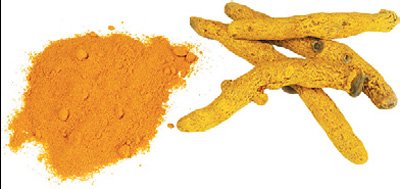
Turmeric
Turmeric (E), Haldi (H):
Turmeric is a perennial grown throughout the tropical parts of Asia. It favours a warm and humid climate. Haridra- literally means 'yellow' and its strong yellow colour signifies its use as a liver herb that is good at drying damp and moving stagnation in the blood.
Digestion For all intestinal infections and mucus conditions. Turmeric helps to promote 'sweet' intestines by reducing pathogenic bacteria and destroying ama. It has recently been proven to have an affinity for the large intestine and to play a preventative role in bowel cancer. Other clinical trials have proven its efficacy at treating dyspepsia and stomach ulcers. Its bitter and pungent flavours act on the agni of rasa dhatu and enhance its ability to nourish the plasma and blood. Traditionally used in diabetes to clear ama, kapha and excess fat tissue (Paranjpe 2001, Bone 2003). Liver A stimulant effect to the liver and ran˜jaka pitta increases the flow of blood through the hepatic system and increases bile output. This helps to dissolve and prevent gallstones. It is traditionally considered a blood 'purifier' and is often used for beautifying the skin and clearing systemic toxaemia; eczema, urticaria, psoriasis and acne. As with many liver herbs it is also good for the eyes; a wash is used in conjunctivitis and styes. Gynaecology Turmeric is used to clear kapha accumulations from the lower abdomen, uterus and apanaksetra. Fibroids, cysts, endometriosis, dysmenorrhoea, amenorrhoea and leucorrhoea are all treated by reducing congestion. As a specific herb for rasa dhatu it also works on its secondary tissue stanyasrotas and is used to purify breast milk as well as to promote the flow of the menses. A poultice can be very effective in mastitis (Atreya 1998). Inflammation Curcumin reduces inflammation caused by arachidonic acid (cf usage for dysmenorrhoea). It is used in dermatitis, eczema, urticaria, psoriasis, colitis, asthma, rheumatoid arthritis, osteoarthritis. Hence it is used in pitta–kapha conditions at low doses and mixed with other bitter herbs. It is also a renowned antibacterial. Joints It treats inflammation of the joints, alleviates pain and strengthens the joints and tendons. Useful for treating gout, arthritis, broken bones and wounds. Heart Turmeric nourishes the heart by virtue of its raktavardhaka and blood building quality. By increasing blood flow and reducing total cholesterol turmeric helps the functions of the heart. It has an antiplatelet activity and scrapes accumulations from the channels (lekhaniya) which helps to prevent coagulation and reduce kapha in the blood. Infections Turmeric is an excellent antibiotic useful in fevers, sore throat and septicaemia. External Excellent for reducing pain as a topical application in bruises, infections, sprains and pain. Use it carefully as it stains the skin and anything it comes into contact with.

 Arjuna
 Salt
Salt Kushtha
 Gurmar
 Coriander
 Cumin
Cumin Guduchi
 Coleus
 Myrrh
Myrrh Kanchanara
 Brahmi
 Devadaru
 Test your English Language
  Retro Toys That Are Now Worth A Fortune Rules to play Fencing Rules to play Roller Soccer Scary Bridges In The World Amazing Animals
 Benefits of Apricots Rules to play Equestrianism Best Photo Apps Rules to play Parachuting Rules to Play Down Hill Skiing
 Intriguing Lost Cities Around the World Yoga Basics
 Valentines Gift Ideas For Her Bodyweight Exercises
 Benefits of Cumin Rules to play Checkers Rules to play Croquet Rules to play Cross Country Running