


Akbar Takes Power
Akbar



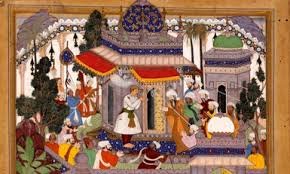
Akbar Takes Power
In 1555, Humayan died just months after retaking Delhi. Akbar ascended the Mughal throne at the age of 13, and became Shahanshah (King of Kings). His regent was Bayram Khan, his childhood guardian and an outstanding warrior statesman.The young emperor almost immediately lost Delhi once more to the Hindu leader Hemu. However, in November of 1556, Generals Bayram Khan and Khan Zaman I defeated Hemus much larger army at the Second Battle of Panipat. Hemu himself was shot through the eye as he rode into battle atop an elephant; the Mughal army captured and executed him.
When he came of age at 18, Akbar dismissed the increasingly overbearing Bayram Khan and took direct control of the empire and army. Bayram was ordered to make the hajj to Mecca; instead, he started a rebellion against Akbar. The young emperors forces defeated Bayrams rebels at Jalandhar, in the Punjab; rather than executing the rebel leader, Akbar mercifully allowed his former regent another chance to go to Mecca. This time, Bayram Khan went.

 Akbar the Polemic
 Imperial expansion
 Military innovations
 Matters of Faith and Marriage
 Akbar the Architect
 Akbar Takes Power
 Akbar the Administrator
 Capital
 Foreign Relations
 Personality and assessment
 Legacy
 Akbar the Warrior
 Test your English Language
  Most Beautiful Eyes In The World
 Gandhi Jayanti Avataars of Lord Vishnu
 Benefits of Pumpkins Rules to play Dominoes
 Benefits of Cumin Rules to play Synchronized Swimming Most Powerful Weapons In History The Worlds Craziest Bar Concepts
 Narayana Murthy Forever Young Naturally Lifestyle
 World Architecture
 Tips to get ready for Study Abroad Amazing Animals Makeup for Valentines Day Reasons Tim Tebow Breaks The Mold
 Reasons To Love The Monsoon Reasons You Should Brush Your Teeth