Healthy Back
21. Find the right spine specialist

Many people who suffer from ongoing back pain need to visit a spine specialist. Sometimes it will take a process of trial and error and seeing a number of health care professionals before finding back pain relief and a treatment program that works for you. Also, try to be patient, as treating back pain is often more an art than a science and it may take a while to find the most helpful treatment. Read more at Specialists Who Treat Back Pain.
22. Proactively manage your situation

We encourage you to proactively manage treatment for your back pain. This includes carefully preparing for your doctor visits, so that they are as productive and helpful as possible, and educating yourself with reliable information so you can ask the doctor the most useful questions. Read more with Preparing to Meet with a Spine Surgeon or Spine Specialist.
23. Lifting
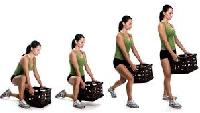
kneel down on one knee with the other foot flat on the floor as near as possible to the item you are lifting. Lift with your legs, not your back, keeping the object close to your body at all times.
24. Reaching and Bending
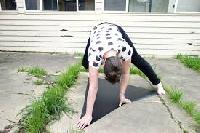
When reaching for something above shoulder level, stand on a stool. Straining to reach such objects may not only hurt your mid back and neck, but it can also bring on shoulder problems.Do NOT bend over at the waist to pick up items from the floor or a table.Instead, kneel down on one knee, as close as possible to the item you are lifting, with the other foot flat on the floor and pick the item up. Or bend at the knees, keep the item close to your body, and lift with your legs, not your back.
25. Correct sitting position
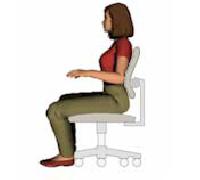
Sit up with your back straight and your shoulders back. Your buttocks should touch the back of your chair.All three normal back curves should be present while sitting. A small, rolled up towel or a lumbar roll can be used to help you maintain the normal curves in your back.Heres how to find a good sitting position when youre not using a back support or lumbar roll Sit at the end of your chair and slouch completely. Draw yourself up and accentuate the curve of your back as far as possible. Hold for a few seconds. Release the position slightly (about 10 degrees). This is a good sitting posture.Distribute your body weight evenly on both hips. Bend your knees at a right angle. Keep your knees even with or slightly higher than your hips. (use a foot rest or stool if necessary). Your legs should not be crossed.Keep your feet flat on the floor.Try to avoid sitting in the same position for more than 30 minutes.At work, adjust your chair height and work station so you can sit up close to your work and tilt it up at you. Rest your elbows and arms on your chair or desk, keeping your shoulders relaxed.When sitting in a chair that rolls and pivots, dont twist at the waist while sitting. Instead, turn your whole body.When standing up from the sitting position, move to the front of the seat of your chair. Stand up by straightening your legs. Avoid bending forward at your waist. Immediately stretch your back by doing 10 standing backbends.
26. Correct driving position
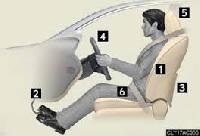
Use a back support (lumbar roll) at the curve of your back. Your knees should be at the same level or higher than your hips.Move the seat close to the steering wheel to support the curve of your back. The seat should be close enough to allow your knees to bend and your feet to reach the pedals.
27. Correct lifting position
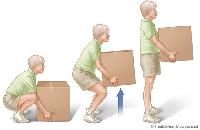
If you must lift objects, do not try to lift objects that are awkward or are heavier than 30 pounds. Before you lift a heavy object, make sure you have firm footing. To pick up an object that is lower than the level of your waist, keep your back straight and bend at your knees and hips. Do not bend forward at the waist with your knees straight.Stand with a wide stance close to the object you are trying to pick up and keep your feet firm on the ground. Tighten your stomach muscles and lift the object using your leg muscles. Straighten your knees in a steady motion. Dont jerk the object up to your body.Stand completely upright without twisting. Always move your feet forward when lifting an object.If you are lifting an object from a table, slide it to the edge to the table so that you can hold it close to your body. Bend your knees so that you are close to the object. Use your legs to lift the object and come to a standing position.Avoid lifting heavy objects above waist level.Hold packages close to your body with your arms bent. Keep your stomach muscles tight. Take small steps and go slowly. To lower the object, place your feet as you did to lift, tighten stomach muscles and bend your hips and knees.