Homeopathy
181. RAPHANUS
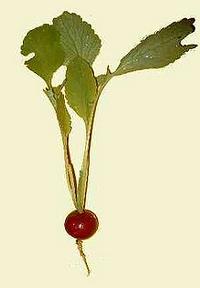
Raphanus sativus var. niger
Black radish.
Key Uses:Extreme abdominal distension Postoperative pain
Origin : Native to southern Asia, but now widely cultivated worldwide.
Background : The ancient Romans used radish oil for skin diseases, and radish was a noted digestive stimulant in Chinese medicine by CE 659.
Preparation : The fresh roots, dug up in spring before flowering, are finely chopped and steeped in alcohol.
Remedy Profile : Those who benefit most from Raphanus may feel “collapsed” and lacking in spirit. The remedy has a strong affinity with the digestive tract, and is given for extreme abdominal distension. A classic use of Raphanus is for postoperative pain due to trapped gas, with gurgling and great swelling in the abdomen.
Symptoms Better : For walking in the open air.
Symptoms Worse : At night; for jarring; for coughing; for touch, even of the clothes; for laughing.
Black radish.
Key Uses:
Origin : Native to southern Asia, but now widely cultivated worldwide.
Background : The ancient Romans used radish oil for skin diseases, and radish was a noted digestive stimulant in Chinese medicine by CE 659.
Preparation : The fresh roots, dug up in spring before flowering, are finely chopped and steeped in alcohol.
Remedy Profile : Those who benefit most from Raphanus may feel “collapsed” and lacking in spirit. The remedy has a strong affinity with the digestive tract, and is given for extreme abdominal distension. A classic use of Raphanus is for postoperative pain due to trapped gas, with gurgling and great swelling in the abdomen.
Symptoms Better : For walking in the open air.
Symptoms Worse : At night; for jarring; for coughing; for touch, even of the clothes; for laughing.
182. RANUNCULUS BULB
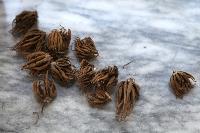
Ranunculus bulbosus
Bulbous buttercup, bulbous crowfoot.
Key Uses:Muscle, joint, and skin problems, possibly occurring simultaneously Herpes zoster (shingles)
Origin : Native to Europe, but now also common throughout North America.
Background : The buttercup has been used medicinally since the time of ancient Greece. Toxic and irritant, it was mostly used externally for skin growths such as warts and blemishes.
Preparation : The whole plant in flower is finely chopped and steeped in alcohol.
Remedy Profile : This remedy is most suited to those who are irritable, depressed, and quarrelsome. They feel weepy and inadequate, and worse for thinking about their symptoms. Restlessness and insomnia are common characteristic traits.
The classic symptom picture for Ranunculus bulb. includes muscle, joint, and skin problems, possibly occurring simultaneously. Typical muscle problems include soreness, deep, bruising pain, and, particularly, chest pain between the ribs. The classic skin symptoms for this remedy focus on eczema or herpes, especially herpes zoster (shingles), with intense burning and itching.
Symptoms Better : For warm weather; for warm compresses; for rest; for standing; for sitting bent forward.
Symptoms Worse : For drafts or open air, especially damp, cold air; for stormy weather; for changes in temperature; for movement, particularly of the arms; for thinking about symptoms; for alcohol.
Bulbous buttercup, bulbous crowfoot.
Key Uses:
Origin : Native to Europe, but now also common throughout North America.
Background : The buttercup has been used medicinally since the time of ancient Greece. Toxic and irritant, it was mostly used externally for skin growths such as warts and blemishes.
Preparation : The whole plant in flower is finely chopped and steeped in alcohol.
Remedy Profile : This remedy is most suited to those who are irritable, depressed, and quarrelsome. They feel weepy and inadequate, and worse for thinking about their symptoms. Restlessness and insomnia are common characteristic traits.
The classic symptom picture for Ranunculus bulb. includes muscle, joint, and skin problems, possibly occurring simultaneously. Typical muscle problems include soreness, deep, bruising pain, and, particularly, chest pain between the ribs. The classic skin symptoms for this remedy focus on eczema or herpes, especially herpes zoster (shingles), with intense burning and itching.
Symptoms Better : For warm weather; for warm compresses; for rest; for standing; for sitting bent forward.
Symptoms Worse : For drafts or open air, especially damp, cold air; for stormy weather; for changes in temperature; for movement, particularly of the arms; for thinking about symptoms; for alcohol.
183. RHUS TOX
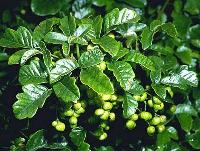
Rhus toxicodendron
Poison ivy, poison oak.
Key Uses:Musculoskeletal problems, such as cramps, sprains, strains, restless legs, rheumatic or arthritic pain, and sciatica Skin conditions, such as chicken pox, shingles, herpes, rosacea, eczema, and diaper rash Skin eruptions with blisters
Origin : Found widely in North America.
Background : Native Americans used this plant to treat skin eruptions and nervous paralysis. Contact with its leaves produces redness, swelling, and blistering.
Preparation : The fresh leaves, gathered at sunset just before the plant comes into flower, are macerated in alcohol.
Remedy Profile : Rhus tox. is particularly beneficial to people who are usually lively but shy, but restless and agitated when ill. Children who respond to the remedy tend to be overactive, restless, irritable, and malicious. If illness becomes chronic in these people, they may become fixed in their ways. Rhus tox. is known primarily as a remedy for skin and joint disorders. It may be helpful for skin eruptions with blisters, followed by burning, red, swollen skin that tends to scale and flake off. Skin conditions such as chicken pox, shingles, herpes, eczema, rosacea, and diaper rash may all respond to the remedy. Musculoskeletal problems are another focus of Rhus tox. It is used for acute rheumatic or arthritic pain, sciatica, restless legs, cramps, sprains, and strains.
RHODODENDRON CHRYSANTHUM (Siberian rhododendron)
162
Symptoms Better : For heat; for warm, dry weather; for hot baths; for continued movement; for nosebleeds.
Symptoms Worse : For cold; in winter; for being chilled; for damp conditions; before storms; on beginning to move; during sleep.
Poison ivy, poison oak.
Key Uses:
Origin : Found widely in North America.
Background : Native Americans used this plant to treat skin eruptions and nervous paralysis. Contact with its leaves produces redness, swelling, and blistering.
Preparation : The fresh leaves, gathered at sunset just before the plant comes into flower, are macerated in alcohol.
Remedy Profile : Rhus tox. is particularly beneficial to people who are usually lively but shy, but restless and agitated when ill. Children who respond to the remedy tend to be overactive, restless, irritable, and malicious. If illness becomes chronic in these people, they may become fixed in their ways. Rhus tox. is known primarily as a remedy for skin and joint disorders. It may be helpful for skin eruptions with blisters, followed by burning, red, swollen skin that tends to scale and flake off. Skin conditions such as chicken pox, shingles, herpes, eczema, rosacea, and diaper rash may all respond to the remedy. Musculoskeletal problems are another focus of Rhus tox. It is used for acute rheumatic or arthritic pain, sciatica, restless legs, cramps, sprains, and strains.
RHODODENDRON CHRYSANTHUM (Siberian rhododendron)
162
Symptoms Better : For heat; for warm, dry weather; for hot baths; for continued movement; for nosebleeds.
Symptoms Worse : For cold; in winter; for being chilled; for damp conditions; before storms; on beginning to move; during sleep.
184. RHODODENDRON
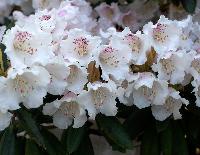
Rhododendron chrysanthum
Siberian rhododendron, yellow snow rose.
Key Uses:Hydrocele Joint problems, such as gout, arthritis, or rheumatic pain
Origin : Found mainly in alpine areas of Siberia, but also in mountainous regions of Asia and Europe.
Background : An infusion of this plant is a traditional Mongolian drink used by hunters to ease weary, painful limbs and for gout and rheumatic pains.
Preparation : The leafy shoots are dried and macerated in alcohol.
Remedy Profile : Rhododendron is most suited to nervous, overly sensitive people who are deeply affected by the weather. Prior to a storm, they may feel confused, excited, and faint, alternating feverish excitement with chaotic behavior.
The symptom picture for this remedy focuses primarily on joint problems such as gout, arthritis, or rheumatic pain. Symptoms may affect the fibrous tissues, small joints, bones, and nerves, often resulting in swollen joints, with tearing, wrenching pain that causes restlessness, weakness, and stiffness in the limbs. Joint pains may move around the body. The remedy may also be used to ease swelling in the scrotum (hydrocele).
Symptoms Better : For warmth; for the heat of the sun; after a storm breaks; for wrapping up the head; for lying in bed with the limbs drawn up; for movement.
Symptoms Worse : For rough or windy weather; for getting wet or catching cold; before storms; for changes in temperature; for rest; on beginning to move.
Siberian rhododendron, yellow snow rose.
Key Uses:
Origin : Found mainly in alpine areas of Siberia, but also in mountainous regions of Asia and Europe.
Background : An infusion of this plant is a traditional Mongolian drink used by hunters to ease weary, painful limbs and for gout and rheumatic pains.
Preparation : The leafy shoots are dried and macerated in alcohol.
Remedy Profile : Rhododendron is most suited to nervous, overly sensitive people who are deeply affected by the weather. Prior to a storm, they may feel confused, excited, and faint, alternating feverish excitement with chaotic behavior.
The symptom picture for this remedy focuses primarily on joint problems such as gout, arthritis, or rheumatic pain. Symptoms may affect the fibrous tissues, small joints, bones, and nerves, often resulting in swollen joints, with tearing, wrenching pain that causes restlessness, weakness, and stiffness in the limbs. Joint pains may move around the body. The remedy may also be used to ease swelling in the scrotum (hydrocele).
Symptoms Better : For warmth; for the heat of the sun; after a storm breaks; for wrapping up the head; for lying in bed with the limbs drawn up; for movement.
Symptoms Worse : For rough or windy weather; for getting wet or catching cold; before storms; for changes in temperature; for rest; on beginning to move.
185. RADIUM BROM

Radium bromatum
Radium bromide.
Key Uses:Acute rheumatic pains Conditions arising from radiation poisoning or treatment, such as ulcers from X-ray burns Neuralgic pains Psoriasis, eczema, dermatitis, acne rosacea, nevi, or moles Skin cancer
Origin : Chemically prepared.
Background : Radium is too unstable to exist in a pure form in nature, and usually combines with chlorine or bromine.
Preparation : The compound is dissolved in purified water, diluted, and succussed.
Remedy Profile : Radium brom. is best suited to depressed, anxious people who need company and are afraid of being alone in the dark. Conditions arising from radiation poisoning or treatment, such as ulcers from X-ray burns or skin problems, are typically treated with the remedy. Skin symptoms are characterized by burning, dry, itchy, scaly eruptions, or by thickening or callousing of the skin: psoriasis, eczema, dermatitis, acne rosacea, nevi (skin blemishes), moles, ulcers, and even cancers may all respond to the remedy. Constricting neuralgic pains, acute rheumatic pains, and numbness may also be helped by Radium brom.
Symptoms Better : For open air; for hot baths; for sleep; for eating.
Symptoms Worse : For movement; for getting up from lying down; for shaving; for bathing.
Radium bromide.
Key Uses:
Origin : Chemically prepared.
Background : Radium is too unstable to exist in a pure form in nature, and usually combines with chlorine or bromine.
Preparation : The compound is dissolved in purified water, diluted, and succussed.
Remedy Profile : Radium brom. is best suited to depressed, anxious people who need company and are afraid of being alone in the dark. Conditions arising from radiation poisoning or treatment, such as ulcers from X-ray burns or skin problems, are typically treated with the remedy. Skin symptoms are characterized by burning, dry, itchy, scaly eruptions, or by thickening or callousing of the skin: psoriasis, eczema, dermatitis, acne rosacea, nevi (skin blemishes), moles, ulcers, and even cancers may all respond to the remedy. Constricting neuralgic pains, acute rheumatic pains, and numbness may also be helped by Radium brom.
Symptoms Better : For open air; for hot baths; for sleep; for eating.
Symptoms Worse : For movement; for getting up from lying down; for shaving; for bathing.
186. RHEUM
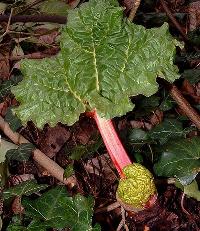
Rheum officinale or R. palmatum
Rhubarb or Chinese rhubarb.
Key Uses:Chronic diarrhea, with yellow or green, frothy or fermented stools that are sour-smelling Colicky pain, often accompanied by shivering and an urge to pass stools Nausea Teething
Origin : Both species are native to China and Tibet, but are now grown worldwide.
Background : Long used in Chinese medicine, notably as a laxative, these non-culinary types of rhubarb were adopted by European doctors in the 18th century.
Preparation : The root of either species is dried and macerated in alcohol.
Remedy Profile : Rheum is most suitable for those with sour moods who tend to be undemanding and withdrawn, yet restless and “quarrelsome in sleep.” Children who respond to Rheum are full of fears, crying and restless at night. Both adults and children may tire rapidly.
Chronic, sour-smelling diarrhea is a key condition linked with Rheum. The stools are sour-smelling, and may be yellow or green, frothy, or fermented. Further typical symptoms include sour-smelling breath and a sour taste to all foods, causing a loss of appetite. The remedy may also be used for nausea or colicky pain that feels worse for standing and is often accompanied by shivering and an urge to pass stools.
Symptoms Better : For wrapping up; for warmth; for doubling over on lying down.
Symptoms Worse : For hot weather; for teething; before, during, and after passing stools; for eating sour fruits in the summer.
Rhubarb or Chinese rhubarb.
Key Uses:
Origin : Both species are native to China and Tibet, but are now grown worldwide.
Background : Long used in Chinese medicine, notably as a laxative, these non-culinary types of rhubarb were adopted by European doctors in the 18th century.
Preparation : The root of either species is dried and macerated in alcohol.
Remedy Profile : Rheum is most suitable for those with sour moods who tend to be undemanding and withdrawn, yet restless and “quarrelsome in sleep.” Children who respond to Rheum are full of fears, crying and restless at night. Both adults and children may tire rapidly.
Chronic, sour-smelling diarrhea is a key condition linked with Rheum. The stools are sour-smelling, and may be yellow or green, frothy, or fermented. Further typical symptoms include sour-smelling breath and a sour taste to all foods, causing a loss of appetite. The remedy may also be used for nausea or colicky pain that feels worse for standing and is often accompanied by shivering and an urge to pass stools.
Symptoms Better : For wrapping up; for warmth; for doubling over on lying down.
Symptoms Worse : For hot weather; for teething; before, during, and after passing stools; for eating sour fruits in the summer.
187. RHUS VEN
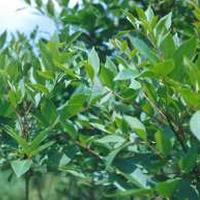
Rhus venenata syn. R. vernix
Poison sumac, poison elder.
Key Uses:Flaking, itching skin, possibly with patches of thickening or hardening, and a tendency for the skin to crack
Origin : Found throughout North America, from Canada to the Gulf of Mexico.
Background : More toxic than poison ivy (see left), this plant produces a volatile oil that can cause inflamed, blistering lesions, possibly affecting the whole body.
Preparation : The young, leafy twigs are macerated in alcohol.
Remedy Profile : Gloomy, forgetful people are most likely to benefit from Rhus ven., particularly if they feel unable to connect ideas together and have no will for life.
The physical symptoms associated with this remedy are similar to those treated by Rhus tox., although the focus is more heavily on skin conditions. The classic symptom picture for Rhus ven. includes flaking, itching skin, possibly with patches of thickening or hardening, and a tendency for the skin to crack. All symptoms are markedly worse in the morning.
Symptoms Better : For open air; for hot baths; for gentle touch; for mild exercise.
Symptoms Worse : For damp weather; for getting wet; in the morning; for touch and pressure on the affected area; for rest; on waking.
Poison sumac, poison elder.
Key Uses:
Origin : Found throughout North America, from Canada to the Gulf of Mexico.
Background : More toxic than poison ivy (see left), this plant produces a volatile oil that can cause inflamed, blistering lesions, possibly affecting the whole body.
Preparation : The young, leafy twigs are macerated in alcohol.
Remedy Profile : Gloomy, forgetful people are most likely to benefit from Rhus ven., particularly if they feel unable to connect ideas together and have no will for life.
The physical symptoms associated with this remedy are similar to those treated by Rhus tox., although the focus is more heavily on skin conditions. The classic symptom picture for Rhus ven. includes flaking, itching skin, possibly with patches of thickening or hardening, and a tendency for the skin to crack. All symptoms are markedly worse in the morning.
Symptoms Better : For open air; for hot baths; for gentle touch; for mild exercise.
Symptoms Worse : For damp weather; for getting wet; in the morning; for touch and pressure on the affected area; for rest; on waking.
188. RICINUS

Ricinus communis
Castor oil plant, Palma Christi, castor bean.
Key Uses:Diarrhea, especially in children Nausea and profuse vomiting
Origin : Native to east Africa and grown in hot climates, especially Africa and Asia.
Background : The seeds of this plant are highly toxic, but the oil made from them has been used medicinally for centuries in many cultures, notably for constipation.
Preparation : The ripe seeds are steeped in alcohol, filtered, diluted, and succussed.
Remedy Profile : The digestive system is the primary focus of this remedy. Typical symptoms treated include nausea, profuse vomiting, and diarrhea: Ricinus is useful for children who are seriously prostrated by diarrhea. Typically, there is severe dehydration and great thirst, but no desire to eat.
Symptoms Better : None known.
Symptoms Worse : For pressure on the abdomen.
Castor oil plant, Palma Christi, castor bean.
Key Uses:
Origin : Native to east Africa and grown in hot climates, especially Africa and Asia.
Background : The seeds of this plant are highly toxic, but the oil made from them has been used medicinally for centuries in many cultures, notably for constipation.
Preparation : The ripe seeds are steeped in alcohol, filtered, diluted, and succussed.
Remedy Profile : The digestive system is the primary focus of this remedy. Typical symptoms treated include nausea, profuse vomiting, and diarrhea: Ricinus is useful for children who are seriously prostrated by diarrhea. Typically, there is severe dehydration and great thirst, but no desire to eat.
Symptoms Better : None known.
Symptoms Worse : For pressure on the abdomen.
189. RUMEX CRISPUS
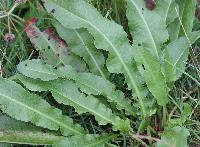
Rumex crispus
Yellow dock, curled dock.
Key Uses:Asthma Whooping cough, dry, tickling coughs, croup, or other hard, hacking coughs
Origin : Native to Europe and Africa.
Background : Long used in Western herbal medicine, yellow dock is a mild laxative and also acts as a stimulant to the liver and gallbladder.
Preparation : The fresh root is finely chopped and macerated in alcohol.
Remedy Profile : Rumex crispus is best suited to low-spirited, serious people who are very restless in the evening. Their sleep is often wakeful, and unpleasant dreams and fantasies disturb them when asleep or awake. The throat and chest are the main focus of Rumex crispus. There may be whooping cough, a dry, tickling cough, croup, or other hard, hacking cough, or asthma that is suffocating and choking on going to bed. There may be great concentration on the breathing and sensitivity to cold air.
Symptoms Better : For wrapping up, including wrapping the head; for covering the mouth; for drinking; for sucking hard candy.
Symptoms Worse : For cold air; for open air; for breathing in cold air; for touch and pressure on the throat; for uncovering; for movement; for talking; for eating.
Yellow dock, curled dock.
Key Uses:
Origin : Native to Europe and Africa.
Background : Long used in Western herbal medicine, yellow dock is a mild laxative and also acts as a stimulant to the liver and gallbladder.
Preparation : The fresh root is finely chopped and macerated in alcohol.
Remedy Profile : Rumex crispus is best suited to low-spirited, serious people who are very restless in the evening. Their sleep is often wakeful, and unpleasant dreams and fantasies disturb them when asleep or awake. The throat and chest are the main focus of Rumex crispus. There may be whooping cough, a dry, tickling cough, croup, or other hard, hacking cough, or asthma that is suffocating and choking on going to bed. There may be great concentration on the breathing and sensitivity to cold air.
Symptoms Better : For wrapping up, including wrapping the head; for covering the mouth; for drinking; for sucking hard candy.
Symptoms Worse : For cold air; for open air; for breathing in cold air; for touch and pressure on the throat; for uncovering; for movement; for talking; for eating.
190. SABAL
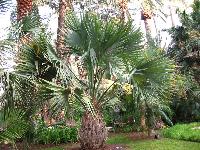
Serenoa repens syn. S. serrulata
Saw palmetto.
Key Uses:Genitourinary disorders, such as frequent urination, urine retention due to prostate enlargement, gonorrhea, or inflammation of the seminal tube Sexual and general fatigue
Origin : Native to southeastern North America.
Background : Native Americans valued this plant as a food source and for its sedative and tonic medicinal properties.
Preparation : The fresh, ripe fruits are finely chopped and macerated in alcohol.
Remedy Profile : People who benefit most from Sabal tend to brood on their symptoms, yet are often angered by sympathy. They may be irritable, apathetic, introverted, depressed, and afraid to go to sleep.
This remedy is given mainly for problems of the genitourinary organs. Typical symptoms treated include frequent urination, especially when this occurs at night, which may be due to cystitis. Urine retention due to prostate enlargement or gonorrhea may be helped by Sabal, as may inflammation in the seminal tubes, heavy, aching pains or, occasionally, sharp pains in the bladder that extend to the abdomen or radiate down the thighs. Another typical symptom is a sensation of coldness in the bladder, possibly extending to the external genitals. Sabal is also used for sexual or general fatigue.
Symptoms Better : After sleep.
Symptoms Worse : For cold, damp weather; before menstruating; for sympathy.
Saw palmetto.
Key Uses:
Origin : Native to southeastern North America.
Background : Native Americans valued this plant as a food source and for its sedative and tonic medicinal properties.
Preparation : The fresh, ripe fruits are finely chopped and macerated in alcohol.
Remedy Profile : People who benefit most from Sabal tend to brood on their symptoms, yet are often angered by sympathy. They may be irritable, apathetic, introverted, depressed, and afraid to go to sleep.
This remedy is given mainly for problems of the genitourinary organs. Typical symptoms treated include frequent urination, especially when this occurs at night, which may be due to cystitis. Urine retention due to prostate enlargement or gonorrhea may be helped by Sabal, as may inflammation in the seminal tubes, heavy, aching pains or, occasionally, sharp pains in the bladder that extend to the abdomen or radiate down the thighs. Another typical symptom is a sensation of coldness in the bladder, possibly extending to the external genitals. Sabal is also used for sexual or general fatigue.
Symptoms Better : After sleep.
Symptoms Worse : For cold, damp weather; before menstruating; for sympathy.