Homeopathy
171. PANAX GINSENG

Panax pseudoginseng
San qi ginseng, tienchi ginseng.
Key Uses:Fatigue as a result of excessive sexual intercourse Paralytic weakness Rheumatic pain Sciatica
Origin : Native to Bhutan and northeast India.
Background : In Chinese medicine this herb is reputed to clear the mind and make the limbs elastic and dynamic. It is considered to be a tonic and aphrodisiac.
Preparation : The dried root is steeped in alcohol, diluted, and succussed.
Remedy Profile : Panax ginseng is typically given to people who are experiencing a general sense of stiffening up in the body. The limbs tend to feel heavy, and the joints contract and stiffen up. Paralytic weakness, rheumatic pain, and sciatica may be helped by the remedy. People who benefit from it often feel worse in the open air, and are prone to respiratory problems. Generally there is a sensation of weakness in the sexual organs, possibly as a result of excessive sexual intercourse, although there may be no diminishing of sexual desire.
Symptoms Better : For walking.
Symptoms Worse : For open air; at night; for bending and turning.
San qi ginseng, tienchi ginseng.
Key Uses:
Origin : Native to Bhutan and northeast India.
Background : In Chinese medicine this herb is reputed to clear the mind and make the limbs elastic and dynamic. It is considered to be a tonic and aphrodisiac.
Preparation : The dried root is steeped in alcohol, diluted, and succussed.
Remedy Profile : Panax ginseng is typically given to people who are experiencing a general sense of stiffening up in the body. The limbs tend to feel heavy, and the joints contract and stiffen up. Paralytic weakness, rheumatic pain, and sciatica may be helped by the remedy. People who benefit from it often feel worse in the open air, and are prone to respiratory problems. Generally there is a sensation of weakness in the sexual organs, possibly as a result of excessive sexual intercourse, although there may be no diminishing of sexual desire.
Symptoms Better : For walking.
Symptoms Worse : For open air; at night; for bending and turning.
172. PASSIFLORA

Passiflora incarnata
Passion flower.
Key Uses:Alcoholism Insomnia accompanied by hemorrhoids, pain in the coccyx, or discomfort during or just before menstruation Screaming children Whooping cough
Origin : Native to the southern US and Central and South America, and now cultivated worldwide.
Background : This plant has long been used by indigenous peoples in Central and North America for its valuable sedative and tranquilizing properties.
Preparation : The fresh or dried leaves, gathered in spring, are finely chopped and steeped in alcohol.
Remedy Profile : The classic symptom linked with Passiflora is insomnia. Those who respond best to the remedy tend to lie awake at night and become exhausted. They are prone to odd sensations; they may feel that their eyeballs are protruding, as if being pushed out of their heads, or that the tops of their heads are lifting off. On lying down they may feel that their heels are rising up in the air. Passiflora is considered particularly effective for alcoholics and screaming children.
The remedy may also help whooping cough that is worse at night, and insomnia accompanied by hemorrhoids, pain in the coccyx, or discomfort during or just before menstruation.
Symptoms Better : For remaining quiet.
Symptoms Worse : At night; for mental anxiety and excitement; for exhaustion; after meals.
Passion flower.
Key Uses:
Origin : Native to the southern US and Central and South America, and now cultivated worldwide.
Background : This plant has long been used by indigenous peoples in Central and North America for its valuable sedative and tranquilizing properties.
Preparation : The fresh or dried leaves, gathered in spring, are finely chopped and steeped in alcohol.
Remedy Profile : The classic symptom linked with Passiflora is insomnia. Those who respond best to the remedy tend to lie awake at night and become exhausted. They are prone to odd sensations; they may feel that their eyeballs are protruding, as if being pushed out of their heads, or that the tops of their heads are lifting off. On lying down they may feel that their heels are rising up in the air. Passiflora is considered particularly effective for alcoholics and screaming children.
The remedy may also help whooping cough that is worse at night, and insomnia accompanied by hemorrhoids, pain in the coccyx, or discomfort during or just before menstruation.
Symptoms Better : For remaining quiet.
Symptoms Worse : At night; for mental anxiety and excitement; for exhaustion; after meals.
173. PAEONIA

Paeonia officinalis
Peony.
Key Uses:Nightmares, especially those involving ghosts Rectal and anal problems, such as fissures and hemorrhoids
Origin : Native to Europe and Asia.
Background : Culpeper, the 17th-century English herbalist, claimed that the root of this herb would prevent epilepsy in children if hung around their necks.
Preparation : The fresh, finely chopped root, dug in spring, is steeped in alcohol.
Remedy Profile : This remedy is given mostly for problems in the rectum and anus such as fissures and hemorrhoids, although it may also help to treat terrifying nightmares, particularly those involving ghosts. It is used for intense, burning pain in the anus during and after passing stools, followed by a chilly sensation. The pain may be very severe during the night and eased only by walking, rolling on the floor, or lying for hours with the buttocks spread apart.
Symptoms Better : For warm compresses on the affected area.
Symptoms Worse : At night; for touch or pressure on the affected area.
Peony.
Key Uses:
Origin : Native to Europe and Asia.
Background : Culpeper, the 17th-century English herbalist, claimed that the root of this herb would prevent epilepsy in children if hung around their necks.
Preparation : The fresh, finely chopped root, dug in spring, is steeped in alcohol.
Remedy Profile : This remedy is given mostly for problems in the rectum and anus such as fissures and hemorrhoids, although it may also help to treat terrifying nightmares, particularly those involving ghosts. It is used for intense, burning pain in the anus during and after passing stools, followed by a chilly sensation. The pain may be very severe during the night and eased only by walking, rolling on the floor, or lying for hours with the buttocks spread apart.
Symptoms Better : For warm compresses on the affected area.
Symptoms Worse : At night; for touch or pressure on the affected area.
174. PAREIRA

Pareira brava syn. Chondrodendron tomentosum
Pareira, pareira brava.
Key Uses:Kidney colic Prostate disorders, such as enlarged prostate glands Severe pain in the penis Urinary disorders involving painful urination, and severe pains on the left side of the lower back, and in the penis
Origin : Found in Panama, Brazil, Bolivia, and Peru.
Background : Notoriously used by native South Americans to make curare, an arrow poison, the root of this plant is also used herbally as a diuretic, to increase menstrual flow, and to reduce fever.
Preparation : The fresh root is steeped in alcohol, diluted, and succussed.
Remedy Profile : People for whom Pareira is best suited tend to have a constant urge to urinate, with great straining and painful urination. There is typically severe pain radiating down the thigh, and it may be possible to urinate only in certain positions. In men, there may be severe pain in the penis. Excruciating pains may develop on the left side of the lower back. The urine may contain thick, stringy, white mucus or a red precipitate. Pareira may also be helpful for itching in the urethra, kidney colic, an enlarged prostate gland, and prostate disorders with urine retention.
Symptoms Better : For being on the hands and knees; for pressing the head against the floor.
Symptoms Worse : After midnight; after urinating.
Pareira, pareira brava.
Key Uses:
Origin : Found in Panama, Brazil, Bolivia, and Peru.
Background : Notoriously used by native South Americans to make curare, an arrow poison, the root of this plant is also used herbally as a diuretic, to increase menstrual flow, and to reduce fever.
Preparation : The fresh root is steeped in alcohol, diluted, and succussed.
Remedy Profile : People for whom Pareira is best suited tend to have a constant urge to urinate, with great straining and painful urination. There is typically severe pain radiating down the thigh, and it may be possible to urinate only in certain positions. In men, there may be severe pain in the penis. Excruciating pains may develop on the left side of the lower back. The urine may contain thick, stringy, white mucus or a red precipitate. Pareira may also be helpful for itching in the urethra, kidney colic, an enlarged prostate gland, and prostate disorders with urine retention.
Symptoms Better : For being on the hands and knees; for pressing the head against the floor.
Symptoms Worse : After midnight; after urinating.
175. PHYTOLACCA
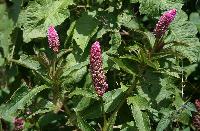
Phytolacca americana
Virginia pokeroot, reading plant, garget, pocon.
Key Uses:Breast problems Inflamed neck glands and tonsils Mononucleosis Mumps Psoriasis Dental pain
Origin : Native to North America, and naturalized in the Mediterranean region.
Background : Used by native Americans for a range of complaints from rheumatoid arthritis to hemorrhoids, this plant is highly potent and toxic in excess.
Preparation : The fresh root is unearthed during the fall, finely chopped, and macerated in alcohol.
Remedy Profile : This remedy has a strong affinity with the glands. It may be given for mastitis with hardness, burning, and pain in the breasts that radiates through the whole body on breast-feeding. Breast ulcers, hard lumps, and even breast cancer may also be helped, as may psoriasis.
Phytolacca may be used for hard, inflamed neck glands, with pain in the throat on swallowing. The tonsils may be inflamed, painful, and discolored dark red, and the tip of the tongue may be red. Inflamed parotid glands—for example during mumps—may be helped by the remedy, as may mononucleosis. Breathing feels difficult, restricted, and oppressed, with a sense of suffocation and emptiness in the chest.
Symptoms Better : For warmth; for open air; for dry weather; for rest; for lying on the painful side.
Symptoms Worse : For cold, damp weather; for prolonged movement; on starting to move; for hot drinks.
Virginia pokeroot, reading plant, garget, pocon.
Key Uses:
Origin : Native to North America, and naturalized in the Mediterranean region.
Background : Used by native Americans for a range of complaints from rheumatoid arthritis to hemorrhoids, this plant is highly potent and toxic in excess.
Preparation : The fresh root is unearthed during the fall, finely chopped, and macerated in alcohol.
Remedy Profile : This remedy has a strong affinity with the glands. It may be given for mastitis with hardness, burning, and pain in the breasts that radiates through the whole body on breast-feeding. Breast ulcers, hard lumps, and even breast cancer may also be helped, as may psoriasis.
Phytolacca may be used for hard, inflamed neck glands, with pain in the throat on swallowing. The tonsils may be inflamed, painful, and discolored dark red, and the tip of the tongue may be red. Inflamed parotid glands—for example during mumps—may be helped by the remedy, as may mononucleosis. Breathing feels difficult, restricted, and oppressed, with a sense of suffocation and emptiness in the chest.
Symptoms Better : For warmth; for open air; for dry weather; for rest; for lying on the painful side.
Symptoms Worse : For cold, damp weather; for prolonged movement; on starting to move; for hot drinks.
176. PLANTAGO
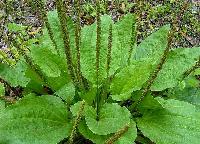
Plantago major
Greater plantain.
Key Uses:Bed-wetting problems Earaches Toothaches
Origin : Native to Europe and temperate regions of Asia, where it grows wild.
Background : Greater plantain has anti- bacterial properties and is sometimes used herbally as a substitute for comfrey to stop bleeding and encourage tissue repair.
Preparation : The fresh root is finely chopped and macerated in alcohol.
Remedy Profile : People who respond best to Plantago are dull, irritable, and impatient. Mental activity exhausts and flusters them, and this is made worse by physical exertion.
Key conditions for which this remedy may be prescribed include earaches and toothaches. Aches are typically caused by sharp, neuralgic pains, often in the head and ears. Twinges of pain may move around the head from front to back, or from ear to ear, and there may be a sensation in the head as if the brain has turned over. Plantago is also given for bed-wetting problems.
Symptoms Better : For sleep; for eating.
Symptoms Worse : At night; for touch; for extremes of heat and cold.
Greater plantain.
Key Uses:
Origin : Native to Europe and temperate regions of Asia, where it grows wild.
Background : Greater plantain has anti- bacterial properties and is sometimes used herbally as a substitute for comfrey to stop bleeding and encourage tissue repair.
Preparation : The fresh root is finely chopped and macerated in alcohol.
Remedy Profile : People who respond best to Plantago are dull, irritable, and impatient. Mental activity exhausts and flusters them, and this is made worse by physical exertion.
Key conditions for which this remedy may be prescribed include earaches and toothaches. Aches are typically caused by sharp, neuralgic pains, often in the head and ears. Twinges of pain may move around the head from front to back, or from ear to ear, and there may be a sensation in the head as if the brain has turned over. Plantago is also given for bed-wetting problems.
Symptoms Better : For sleep; for eating.
Symptoms Worse : At night; for touch; for extremes of heat and cold.
177. PODOPHYLLUM
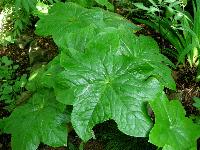
Podophyllum peltatum
May apple, American mandrake.
Key Uses:Abdominal cramps Diarrhea Gastroenteritis Liver problems Ovarian pain
Origin : Native to northeastern North America.
Background : May apple was used by native Americans and 19th-century settlers from Europe as a purgative, but was later found to be highly toxic to cells. It is being researched for treating certain cancers.
Preparation : The fresh rhizome is dug up when the fruits are fully ripe, finely chopped, and macerated in alcohol.
Remedy Profile : Those who benefit most from Podophyllum tend to be forgetful, particularly of words, depressed, afraid that they may die, and unrefreshed by sleep, which is restless.
Digestive tract disorders such as gastroenteritis are typically treated with this remedy. Generally, the lower part of the digestive tract and the liver are most affected. The appetite often wanes, perhaps because everything suddenly tastes sour or putrid, or because the smell of food is loathsome. Sour belching, vomiting, or diarrhea, particularly after eating or drinking, are typical of this symptom picture. Podophyllum may ease abdominal cramps, or profuse, painless diarrhea, preceded by noisy gurgling. Diarrhea may be accompanied by a sinking feeling, as if the pelvic contents are going to prolapse.
Symptoms Better : For warmth; in the evening; for rubbing or stroking the liver area; for bending forward; for lying on the abdomen; for yawning and stretching.
Symptoms Worse : For early morning; in hot weather; for any movement; while being bathed or washed; for eating.
May apple, American mandrake.
Key Uses:
Origin : Native to northeastern North America.
Background : May apple was used by native Americans and 19th-century settlers from Europe as a purgative, but was later found to be highly toxic to cells. It is being researched for treating certain cancers.
Preparation : The fresh rhizome is dug up when the fruits are fully ripe, finely chopped, and macerated in alcohol.
Remedy Profile : Those who benefit most from Podophyllum tend to be forgetful, particularly of words, depressed, afraid that they may die, and unrefreshed by sleep, which is restless.
Digestive tract disorders such as gastroenteritis are typically treated with this remedy. Generally, the lower part of the digestive tract and the liver are most affected. The appetite often wanes, perhaps because everything suddenly tastes sour or putrid, or because the smell of food is loathsome. Sour belching, vomiting, or diarrhea, particularly after eating or drinking, are typical of this symptom picture. Podophyllum may ease abdominal cramps, or profuse, painless diarrhea, preceded by noisy gurgling. Diarrhea may be accompanied by a sinking feeling, as if the pelvic contents are going to prolapse.
Symptoms Better : For warmth; in the evening; for rubbing or stroking the liver area; for bending forward; for lying on the abdomen; for yawning and stretching.
Symptoms Worse : For early morning; in hot weather; for any movement; while being bathed or washed; for eating.
178. PICRIC AC

Acidum picrinicum
Picric acid, trinitrophenol.
Key Uses:Indifference with mental and physical fatigue, which may develop into actual paralysis
Origin : Chemically prepared.
Background : This acid derives its name from the Greek pikros, meaning “bitter.” It is used as a yellow dye and in explosives.
Preparation : The crystals are dissolved in alcohol, diluted, and succussed.
Remedy Profile : Picric ac. is best suited to people who are prone to intellectual collapse and nervous exhaustion—perhaps students who have studied too hard for exams. They have a tendency to be indifferent, listless, and lack motivation, and the slightest exertion makes them want to lie down. Exhaustion and poor concentration are other common symptoms.
The classic symptom picture for Picric ac. is of indifference with great mental and physical fatigue, which may develop into actual paralysis. Muscular pains in the limbs may accompany fatigue, and there may be weak, heavy sensations in the limbs and back, and burning along the spine, particularly upon any exertion. The hands and feet may feel cold.
Symptoms Better : For bandaging affected areas; for rest; for sun and open air; for cold air; for bathing in cold water.
Symptoms Worse : For movement; for mental exertion; for any secretion, such as catarrh, semen, blood, or vaginal discharge.
Picric acid, trinitrophenol.
Key Uses:
Origin : Chemically prepared.
Background : This acid derives its name from the Greek pikros, meaning “bitter.” It is used as a yellow dye and in explosives.
Preparation : The crystals are dissolved in alcohol, diluted, and succussed.
Remedy Profile : Picric ac. is best suited to people who are prone to intellectual collapse and nervous exhaustion—perhaps students who have studied too hard for exams. They have a tendency to be indifferent, listless, and lack motivation, and the slightest exertion makes them want to lie down. Exhaustion and poor concentration are other common symptoms.
The classic symptom picture for Picric ac. is of indifference with great mental and physical fatigue, which may develop into actual paralysis. Muscular pains in the limbs may accompany fatigue, and there may be weak, heavy sensations in the limbs and back, and burning along the spine, particularly upon any exertion. The hands and feet may feel cold.
Symptoms Better : For bandaging affected areas; for rest; for sun and open air; for cold air; for bathing in cold water.
Symptoms Worse : For movement; for mental exertion; for any secretion, such as catarrh, semen, blood, or vaginal discharge.
179. PYROGEN

Pyrogenium
Pyrogen.
Key Uses:Fevers—for example, during menstruation Genital tract infections following childbirth or an abortion Infections Influenza Pelvic infections in women Septic states, such as abscesses that never fully heal
Origin : Decomposed, rotten meat.
Background : The term pyrogen often applies to proteins produced in response to infection. They are also produced when flesh decomposes.
Preparation : Chopped, lean beef is soaked in water, sterilized, dissolved in purified water, then diluted and succussed.
Remedy Profile : People who benefit most from Pyrogen. have a tendency to be hypersensitive, and have overactive brains. Restless and talkative, they often think and talk rapidly. They may feel insane and have bizarre physical sensations; for instance, that their body is “crowded with arms and legs.” These are most common during a fever.
Conditions usually treated by Pyrogen. include infections, fevers, suppuration, influenza, and septic states. Characteristic symptoms include aching, bruising, pain, great restlessness, and foul-smelling sweat, diarrhea, breath, and other discharges. Conditions may be acute or due to a prior infection. There may be red streaks on the skin from the limbs to the heart, or sore, recurring abscesses that never fully heal. The tongue may be red and shiny or coated.
The remedy may also be used to treat infection in the genital tract following childbirth or an abortion, and may help women who have a pelvic infection, or who have a fever during menstruation.
Symptoms Better : For heat; for a hot bath; for stretching; for changing position; for hot drinks.
Symptoms Worse : For cold and damp; for sitting.
Pyrogen.
Key Uses:
Origin : Decomposed, rotten meat.
Background : The term pyrogen often applies to proteins produced in response to infection. They are also produced when flesh decomposes.
Preparation : Chopped, lean beef is soaked in water, sterilized, dissolved in purified water, then diluted and succussed.
Remedy Profile : People who benefit most from Pyrogen. have a tendency to be hypersensitive, and have overactive brains. Restless and talkative, they often think and talk rapidly. They may feel insane and have bizarre physical sensations; for instance, that their body is “crowded with arms and legs.” These are most common during a fever.
Conditions usually treated by Pyrogen. include infections, fevers, suppuration, influenza, and septic states. Characteristic symptoms include aching, bruising, pain, great restlessness, and foul-smelling sweat, diarrhea, breath, and other discharges. Conditions may be acute or due to a prior infection. There may be red streaks on the skin from the limbs to the heart, or sore, recurring abscesses that never fully heal. The tongue may be red and shiny or coated.
The remedy may also be used to treat infection in the genital tract following childbirth or an abortion, and may help women who have a pelvic infection, or who have a fever during menstruation.
Symptoms Better : For heat; for a hot bath; for stretching; for changing position; for hot drinks.
Symptoms Worse : For cold and damp; for sitting.
180. QUERCUS

Quercus robur
Oak, common oak, English oak.
Key Uses:Acute alcohol poisoning Chronic spleen disorders, such as an enlarged spleen due to recurrent malaria or alcoholism Recurrent gout Reduction in alcoholic intake
Origin : Found throughout the Northern Hemisphere and cultivated for its timber.
Background : Sacred to the Druids and dedicated to the Norse god Thor, the oak has long been important in many cultures, both economically and in herbal medicine.
Preparation : The acorns are steeped in alcohol until soft, then peeled, crushed, diluted in alcohol, and succussed.
Remedy Profile : People who respond best to Quercus tend to be nervous, weepy, and unable to speak clearly or think straight.
Chronic spleen disorders involving fluid retention are primarily associated with Quercus. It is used for an enlarged spleen, possibly due to recurrent malaria or to alcoholism. Quercus may relieve the effects of acute alcohol poisoning and lessen the desire for alcohol, although it will not cure alcoholism. Recurrent gout may also be helped by the remedy.
Symptoms Better : None known.
Symptoms Worse : None known.
Oak, common oak, English oak.
Key Uses:
Origin : Found throughout the Northern Hemisphere and cultivated for its timber.
Background : Sacred to the Druids and dedicated to the Norse god Thor, the oak has long been important in many cultures, both economically and in herbal medicine.
Preparation : The acorns are steeped in alcohol until soft, then peeled, crushed, diluted in alcohol, and succussed.
Remedy Profile : People who respond best to Quercus tend to be nervous, weepy, and unable to speak clearly or think straight.
Chronic spleen disorders involving fluid retention are primarily associated with Quercus. It is used for an enlarged spleen, possibly due to recurrent malaria or to alcoholism. Quercus may relieve the effects of acute alcohol poisoning and lessen the desire for alcohol, although it will not cure alcoholism. Recurrent gout may also be helped by the remedy.
Symptoms Better : None known.
Symptoms Worse : None known.