Homeopathy
21. ANHALONIUM
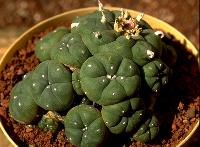
Anhalonium lewinii syn. Lophophora williamsii
Mescal buttons, peyote, sacred mushroom.
Key Uses:Hallucinations with blurred or multicolored vision disturbances Lack of coordination, possibly with muscle tremors, nausea, faintness, giddiness, and neuralgic pains and facial paralysis Mental exhaustion Migraines and other headaches
Origin : Native to the southwestern US and Mexico.
Background : For over 3,000 years this cactus has been used throughout America as a hallucinogenic means of deepening spiritual experiences in religious rites.
Preparation : Boiling water is poured at two intervals on the fresh, chopped root.
Remedy Profile : This remedy is best suited to people who have lost all conception of time and feel separated from ordinary life. They may be introverted, lethargic, depressed, and resentful and distrustful of others, and can experience irrational changes in mood. A general loss of identity and willpower may affect them, along with an impression that life is meaningless. They may have the strange feeling that their whole being has become transparent, enabling them to see their internal organs.
The symptom picture for Anhalonium is of mental exhaustion, hallucinations with brilliant- colored vision, migraines, and lack of coordination. Headaches or migraines may occur in the front of the head, or there may be a persistent aching, tired sensation at the back of the head. There may be blurred vision, dilated pupils, or grotesque, multicolored, distracting vision disturbances. Listening to music may trigger the feeling that each note is surrounded by a halo of color that pulses to the music.
Severe lack of coordination is also associated with Anhalonium; it may be accompanied by muscle tremors, nausea, and faintness, and neuralgic pains and paralysis in the face. The brain is often overactive and prevents sleep.
Symptoms Better : For lying down.
Symptoms Worse : For closing the eyes; for movement.
Mescal buttons, peyote, sacred mushroom.
Key Uses:
Origin : Native to the southwestern US and Mexico.
Background : For over 3,000 years this cactus has been used throughout America as a hallucinogenic means of deepening spiritual experiences in religious rites.
Preparation : Boiling water is poured at two intervals on the fresh, chopped root.
Remedy Profile : This remedy is best suited to people who have lost all conception of time and feel separated from ordinary life. They may be introverted, lethargic, depressed, and resentful and distrustful of others, and can experience irrational changes in mood. A general loss of identity and willpower may affect them, along with an impression that life is meaningless. They may have the strange feeling that their whole being has become transparent, enabling them to see their internal organs.
The symptom picture for Anhalonium is of mental exhaustion, hallucinations with brilliant- colored vision, migraines, and lack of coordination. Headaches or migraines may occur in the front of the head, or there may be a persistent aching, tired sensation at the back of the head. There may be blurred vision, dilated pupils, or grotesque, multicolored, distracting vision disturbances. Listening to music may trigger the feeling that each note is surrounded by a halo of color that pulses to the music.
Severe lack of coordination is also associated with Anhalonium; it may be accompanied by muscle tremors, nausea, and faintness, and neuralgic pains and paralysis in the face. The brain is often overactive and prevents sleep.
Symptoms Better : For lying down.
Symptoms Worse : For closing the eyes; for movement.
22. ANGUSTURA
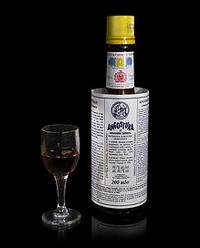
Galipea officinalis syn. G. cusparia
Angostura.
Key Uses:Nervous system disorders Rheumatic conditions
Origin : Native to the Caribbean and tropical South America.
Background : The bitter bark of this tree was long used by native Americans as a tonic, and to stun fish and hence increase the catch. Brought to Europe in 1759, it was originally used for aromatic bitters.
Preparation : Dried bark from the tree’s branches is macerated in alcohol.
Remedy Profile : Angustura is best suited to people who are either timid and weak, or oversensitive, touchy, and “filled with bitterness.” They are often very restless at night, waking for no reason, and unable to get back to sleep. Their dreams are vivid, anxious, and unsettling, and they may crave coffee.
The remedy is typically prescribed for rheumatic conditions and nervous system disorders, especially those affecting the nerves in the spine or causing paralysis. Symptoms include tension and stiffness in the muscles and joints, making them feel sore and bruised. There may be tearing pains in the bones that lead to difficulty in walking. The tissues may even decay due to painful ulcers that penetrate the bone marrow and cause the bones to crumble, particularly the long bones of the body.
Symptoms Better : For applying cold fingers or a cold compress to the affected area; for sitting up; for rest.
Symptoms Worse : For exertion; for stooping; for sitting bent over; for touching the affected area; for noise.
Angostura.
Key Uses:
Origin : Native to the Caribbean and tropical South America.
Background : The bitter bark of this tree was long used by native Americans as a tonic, and to stun fish and hence increase the catch. Brought to Europe in 1759, it was originally used for aromatic bitters.
Preparation : Dried bark from the tree’s branches is macerated in alcohol.
Remedy Profile : Angustura is best suited to people who are either timid and weak, or oversensitive, touchy, and “filled with bitterness.” They are often very restless at night, waking for no reason, and unable to get back to sleep. Their dreams are vivid, anxious, and unsettling, and they may crave coffee.
The remedy is typically prescribed for rheumatic conditions and nervous system disorders, especially those affecting the nerves in the spine or causing paralysis. Symptoms include tension and stiffness in the muscles and joints, making them feel sore and bruised. There may be tearing pains in the bones that lead to difficulty in walking. The tissues may even decay due to painful ulcers that penetrate the bone marrow and cause the bones to crumble, particularly the long bones of the body.
Symptoms Better : For applying cold fingers or a cold compress to the affected area; for sitting up; for rest.
Symptoms Worse : For exertion; for stooping; for sitting bent over; for touching the affected area; for noise.
23. APOCYNUM
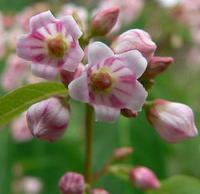
Apocynum cannabinum
Indian hemp, American hemp, hemp dogbane.
Key Uses:Edema associated with diseased organs, and possibly linked with Hodgkin's lymphoma or Bright's disease
Origin : Found in North America.
Background : This plant has long been known by native Americans as a treatment for chronic heart disease. Its fibers are also made into rope, twine, mats, and baskets.
Preparation : The fresh underground parts are chopped and steeped in alcohol.
Remedy Profile : Apocynum is most suitable for people who feel confused, low-spirited, and distressed. The remedy is prescribed primarily as a treatment for edema (a collection of watery fluid in the body cavities or under the skin). The edema is characteristically associated with diseased organs, and may be linked with Hodgkin’s lymphoma or Bright’s disease. There is often great weakness, irritation in the digestive system, a slow or irregular pulse, and considerable thirst. Secretions such as perspiration and urine may be reduced, and breathing patterns may become uneasy.
Symptoms Better : For warmth; for sitting up; after passing stools.
Symptoms Worse : For cold of any kind; for uncovering the body; after sleep.
Indian hemp, American hemp, hemp dogbane.
Key Uses:
Origin : Found in North America.
Background : This plant has long been known by native Americans as a treatment for chronic heart disease. Its fibers are also made into rope, twine, mats, and baskets.
Preparation : The fresh underground parts are chopped and steeped in alcohol.
Remedy Profile : Apocynum is most suitable for people who feel confused, low-spirited, and distressed. The remedy is prescribed primarily as a treatment for edema (a collection of watery fluid in the body cavities or under the skin). The edema is characteristically associated with diseased organs, and may be linked with Hodgkin’s lymphoma or Bright’s disease. There is often great weakness, irritation in the digestive system, a slow or irregular pulse, and considerable thirst. Secretions such as perspiration and urine may be reduced, and breathing patterns may become uneasy.
Symptoms Better : For warmth; for sitting up; after passing stools.
Symptoms Worse : For cold of any kind; for uncovering the body; after sleep.
24. ARANEA DIADEMA

Araneus diadematus
Papal cross spider, European garden spider, diadem spider.
Key Uses:Nervous system disorders accompanied by coldness, susceptibility to damp, and numbness
Origin : Found in Europe and the US.
Background : The name of this spider derives from the yellow-and-white crosses on its back. After mating the female usually binds, kills, and eats the male.
Preparation : The whole, live spider is crushed and macerated in alcohol.
Remedy Profile : People who respond best to this remedy tend to be irritable, uneasy, nervous, and restless. Feelings of claustrophobia or confusion may also be present.
Aranea diadema is most appropriate for problems that affect the nervous system and are accompanied by coldness and a susceptibility to damp. A sensation of great chilliness may occur, as if the bones themselves are frozen, and there may be a fever. All parts of the body may feel heavy, numb, and enlarged (especially on waking); for example, the hands may feel as if they are twice their normal size, and there may be pains that feel like electric shocks. Symptoms tend to occur or recur periodically, or at the same time each day, and are usually on the right side.
Symptoms Better : For smoking; for open air; for pressure on the affected area.
Symptoms Worse : For cold; for damp; for rain; for getting wet; at exactly the same time each day.
Papal cross spider, European garden spider, diadem spider.
Key Uses:
Origin : Found in Europe and the US.
Background : The name of this spider derives from the yellow-and-white crosses on its back. After mating the female usually binds, kills, and eats the male.
Preparation : The whole, live spider is crushed and macerated in alcohol.
Remedy Profile : People who respond best to this remedy tend to be irritable, uneasy, nervous, and restless. Feelings of claustrophobia or confusion may also be present.
Aranea diadema is most appropriate for problems that affect the nervous system and are accompanied by coldness and a susceptibility to damp. A sensation of great chilliness may occur, as if the bones themselves are frozen, and there may be a fever. All parts of the body may feel heavy, numb, and enlarged (especially on waking); for example, the hands may feel as if they are twice their normal size, and there may be pains that feel like electric shocks. Symptoms tend to occur or recur periodically, or at the same time each day, and are usually on the right side.
Symptoms Better : For smoking; for open air; for pressure on the affected area.
Symptoms Worse : For cold; for damp; for rain; for getting wet; at exactly the same time each day.
25. ARGENTUM MET
Argentum metallicum
Silver.
Key Uses:Arthritis Bleeding between menstrual periods or heavy menopausal hemorrhaging Joint and bone disorders associated with the connective tissues, especially the cartilage Men's reproductive system disorders Ovarian pain, possibly due to cysts or tumors
Origin : Deposits are widely distributed throughout the world, but are often small.
Background : This precious metal has been found in ornaments and decorations dating from 4000 BCE, and has long been used to make coins and jewelry.
Preparation : Ground silver is triturated with lactose sugar.
Remedy Profile : Anxious, restless, hurried, impulsive people who often act on a whim respond best to Argentum met. When ill, having to concentrate usually makes these people feel worse, and their thoughts are chaotic, so that they constantly flit from subject to subject when talking. Often changeable and deceitful, although normally cheerful and lively, they may be excessively depressed by small upsets.
Argentum met. is generally used for joint and bone disorders associated with the connective tissues, especially the cartilage.
ARCTOSTAPHYLOS UVA-URSI (Uva-ursi)
125
There may be bruising pains that bore into the joints, or pulling, cramping pains in the limbs and bones. Arthritis with paralytic pain and weakness may be present. The remedy may also be prescribed to treat nervous complaints involving spasmodic movements and convulsive shocks in the body.
Disorders of the reproductive organs may also be treated by Argentum met., especially if they are accompanied by thick, profuse secretions of the related mucous membranes. In men, frequent seminal emissions without sexual excitement at night may be treated. In women the remedy is given for ovarian pain, possibly due to cysts or tumors, and for bleeding between menstrual periods or heavy hemorrhaging during menopause. Argentum met. may also be helpful in treating throat inflammation and voice loss.
Symptoms Better : For wrapping up; for movement.
Symptoms Worse : For warmth; for sun; for mental strain; for using the voice; for touch; in the morning.
Silver.
Key Uses:
Origin : Deposits are widely distributed throughout the world, but are often small.
Background : This precious metal has been found in ornaments and decorations dating from 4000 BCE, and has long been used to make coins and jewelry.
Preparation : Ground silver is triturated with lactose sugar.
Remedy Profile : Anxious, restless, hurried, impulsive people who often act on a whim respond best to Argentum met. When ill, having to concentrate usually makes these people feel worse, and their thoughts are chaotic, so that they constantly flit from subject to subject when talking. Often changeable and deceitful, although normally cheerful and lively, they may be excessively depressed by small upsets.
Argentum met. is generally used for joint and bone disorders associated with the connective tissues, especially the cartilage.
ARCTOSTAPHYLOS UVA-URSI (Uva-ursi)
125
There may be bruising pains that bore into the joints, or pulling, cramping pains in the limbs and bones. Arthritis with paralytic pain and weakness may be present. The remedy may also be prescribed to treat nervous complaints involving spasmodic movements and convulsive shocks in the body.
Disorders of the reproductive organs may also be treated by Argentum met., especially if they are accompanied by thick, profuse secretions of the related mucous membranes. In men, frequent seminal emissions without sexual excitement at night may be treated. In women the remedy is given for ovarian pain, possibly due to cysts or tumors, and for bleeding between menstrual periods or heavy hemorrhaging during menopause. Argentum met. may also be helpful in treating throat inflammation and voice loss.
Symptoms Better : For wrapping up; for movement.
Symptoms Worse : For warmth; for sun; for mental strain; for using the voice; for touch; in the morning.
26. ARUM MAC
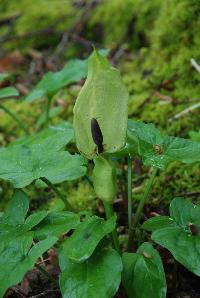
Arum maculatum
Cuckoo-pint, lords and ladies.
Key Uses:Respiratory tract problems, such as asthma, profuse catarrh, violent cough, and nasal polyps
Origin : Native to central and western Europe, growing in woods and hedgerows.
Background : The arrow-shaped leaves and bright red flowers of this plant are poisonous. Insects are trapped by the flowers and digested by the plant.
Preparation : The fresh, finely chopped tuber is macerated in alcohol.
Remedy Profile : Arum mac. is associated with severe, violent inflammation or irritation of the mucous membranes, and is frequently used for respiratory tract problems. Typical respiratory symptoms treated by the remedy include asthma, catarrh, nasal polyps, and constant swallowing. The gums may bleed, and the tongue and throat may be swollen and sore, so that swallowing becomes difficult. There may be tickling in the throat, hoarseness, and a desire to cough. The chest may feel tight, and there may be a violent cough and profuse, possibly blood-streaked catarrh.
Symptoms Better : None known.
Symptoms Worse : For pressure on the affected area; for stretching; on the left side of the body.
Cuckoo-pint, lords and ladies.
Key Uses:
Origin : Native to central and western Europe, growing in woods and hedgerows.
Background : The arrow-shaped leaves and bright red flowers of this plant are poisonous. Insects are trapped by the flowers and digested by the plant.
Preparation : The fresh, finely chopped tuber is macerated in alcohol.
Remedy Profile : Arum mac. is associated with severe, violent inflammation or irritation of the mucous membranes, and is frequently used for respiratory tract problems. Typical respiratory symptoms treated by the remedy include asthma, catarrh, nasal polyps, and constant swallowing. The gums may bleed, and the tongue and throat may be swollen and sore, so that swallowing becomes difficult. There may be tickling in the throat, hoarseness, and a desire to cough. The chest may feel tight, and there may be a violent cough and profuse, possibly blood-streaked catarrh.
Symptoms Better : None known.
Symptoms Worse : For pressure on the affected area; for stretching; on the left side of the body.
27. ARTEMISIA
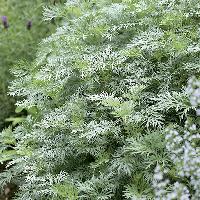
Artemisia vulgaris
Mugwort, wormwood, sailor’s tobacco.
Key Uses:Chorea Epilepsy Fits and seizures, including petit mal in children Nervous disorders, triggered by bad news, grief, or a blow to the head Sleepwalking
Origin : Found in temperate regions of the Northern Hemisphere.
Background : Mugwort was traditionally kept in medieval homes to ward off the devil. Chinese doctors use the herb in moxibustion, a traditional treatment.
Preparation : The fresh root is dug up at the beginning of winter, chopped, and macerated in alcohol.
Remedy Profile : The classic symptom picture for Artemisia is of nervous disorders, possibly triggered by bad news, grief, or a blow to the head.
The nervous conditions for which this remedy is used include sleepwalking, fits or seizures, chorea (involuntary rapid, jerky body movements), and epilepsy. There may be absentmindedness and stupor. Seizures may be brought on by cooling after exertion, or by flickering lights. Children who benefit from Artemisia may tend to experience petit mal fits or absences rather than full seizures, possibly during teething. They may have been born to mothers who felt great grief during their pregnancy.
Symptoms Better : At night; for rubbing the eyes; for deep breathing.
Symptoms Worse : For fright; for grief; for head injury; for menstrual problems; for prolonged dancing.
Mugwort, wormwood, sailor’s tobacco.
Key Uses:
Origin : Found in temperate regions of the Northern Hemisphere.
Background : Mugwort was traditionally kept in medieval homes to ward off the devil. Chinese doctors use the herb in moxibustion, a traditional treatment.
Preparation : The fresh root is dug up at the beginning of winter, chopped, and macerated in alcohol.
Remedy Profile : The classic symptom picture for Artemisia is of nervous disorders, possibly triggered by bad news, grief, or a blow to the head.
The nervous conditions for which this remedy is used include sleepwalking, fits or seizures, chorea (involuntary rapid, jerky body movements), and epilepsy. There may be absentmindedness and stupor. Seizures may be brought on by cooling after exertion, or by flickering lights. Children who benefit from Artemisia may tend to experience petit mal fits or absences rather than full seizures, possibly during teething. They may have been born to mothers who felt great grief during their pregnancy.
Symptoms Better : At night; for rubbing the eyes; for deep breathing.
Symptoms Worse : For fright; for grief; for head injury; for menstrual problems; for prolonged dancing.
28. ARSEN IOD

Arsenicum iodatum
Arsenic iodide, iodide of arsenic.
Key Uses:Asthma Hay fever Influenza Hyperactivity
Origin : Chemically prepared.
Background : These orange-red crystals are highly toxic and must be protected from light to prevent the loss of iodine.
Preparation : Pure arsenic iodide crystals are dissolved in alcohol.
Remedy Profile : This remedy is most appropriate for people who are irritable and restless. Excitable and impatient, they may have sudden, violent impulses. Their bodies are warm.
The classic symptom picture for Arsen. iod. is of either great restlessness or total exhaustion, possibly associated with chronic chest infection and burning discharges from the mucous membranes. There may be a history of allergic and respiratory conditions.
Arsen. iod. is most often used for hay fever or influenza that is accompanied by the classic burning discharge, soreness of the mucous membranes, and frequent sneezing. There may be a loose, short, hacking cough or a burning, sore throat associated with inflammation. The remedy may also be given for asthma and shortness of breath with rapid breathing that gradually becomes a wheeze. It may also be used for hyperactivity in children.
Symptoms Better : For open air; after eating.
Symptoms Worse : For dry, windy, cold, or foggy weather; for the heat of the bed; for exertion; for tobacco smoke.
Arsenic iodide, iodide of arsenic.
Key Uses:
Origin : Chemically prepared.
Background : These orange-red crystals are highly toxic and must be protected from light to prevent the loss of iodine.
Preparation : Pure arsenic iodide crystals are dissolved in alcohol.
Remedy Profile : This remedy is most appropriate for people who are irritable and restless. Excitable and impatient, they may have sudden, violent impulses. Their bodies are warm.
The classic symptom picture for Arsen. iod. is of either great restlessness or total exhaustion, possibly associated with chronic chest infection and burning discharges from the mucous membranes. There may be a history of allergic and respiratory conditions.
Arsen. iod. is most often used for hay fever or influenza that is accompanied by the classic burning discharge, soreness of the mucous membranes, and frequent sneezing. There may be a loose, short, hacking cough or a burning, sore throat associated with inflammation. The remedy may also be given for asthma and shortness of breath with rapid breathing that gradually becomes a wheeze. It may also be used for hyperactivity in children.
Symptoms Better : For open air; after eating.
Symptoms Worse : For dry, windy, cold, or foggy weather; for the heat of the bed; for exertion; for tobacco smoke.
29. ARUM TRIPH

Arisaema triphyllum syn. A. atrorubens, Arum triphyllum
Jack-in-the-pulpit, Indian turnip, wild turnip.
Key Uses:Allergic skin reactions Eczema Hay fever Scarlet fever
Origin : Found in North America.
Background : Jack-in-the-pulpit was used medicinally by native Americans. The fresh root is a severe skin irritant, but when dried it was used for a variety of ailments, including headaches, chest problems, and rheumatoid arthritis.
Preparation : The fresh tuber is chopped and macerated in alcohol.
Remedy Profile : People who respond best to Arum triph. tend to be excitable and nervous. They are often restless and cross. Characteristically, they may bore their heads into their pillows. Key conditions associated with Arum triph. involve irritation and inflammation of the mucous membranes and skin, such as allergic skin reactions, eczema, scarlet fever, or hay fever. Typical symptoms include raw, red, itchy skin, particularly on the face, and a raw, burning mouth and throat, with acute or chronic hoarseness. The lips may be chapped or cracked at the corners. Picking the lips and the nose are further common symptoms, especially if accompanied by delirium.
Symptoms Better : For warmth; for eating breakfast and dinner.
Symptoms Worse : For cold and wet; for heat; for cold, northeasterly winds; for overusing the voice; for lying down.
Jack-in-the-pulpit, Indian turnip, wild turnip.
Key Uses:
Origin : Found in North America.
Background : Jack-in-the-pulpit was used medicinally by native Americans. The fresh root is a severe skin irritant, but when dried it was used for a variety of ailments, including headaches, chest problems, and rheumatoid arthritis.
Preparation : The fresh tuber is chopped and macerated in alcohol.
Remedy Profile : People who respond best to Arum triph. tend to be excitable and nervous. They are often restless and cross. Characteristically, they may bore their heads into their pillows. Key conditions associated with Arum triph. involve irritation and inflammation of the mucous membranes and skin, such as allergic skin reactions, eczema, scarlet fever, or hay fever. Typical symptoms include raw, red, itchy skin, particularly on the face, and a raw, burning mouth and throat, with acute or chronic hoarseness. The lips may be chapped or cracked at the corners. Picking the lips and the nose are further common symptoms, especially if accompanied by delirium.
Symptoms Better : For warmth; for eating breakfast and dinner.
Symptoms Worse : For cold and wet; for heat; for cold, northeasterly winds; for overusing the voice; for lying down.
30. ARUNDO

Arundo mauritanica
Reed, cannizzola.
Key Uses:Allergies, especially hay fever, catarrhal inflammation, and extreme itching inside the nose Blepharitis Wet coughs with breathlessness
Origin : Found in southern Europe, Africa, and Asia.
Background : This genus is used in reeds for wind instruments, in wickerwork, and to make windbreaks to control erosion.
Preparation : The root sprouts are macerated in alcohol.
Remedy Profile : The mental state for which Arundo is most appropriate is one in which laughter comes easily, as do lascivious thoughts. Allergic problems are the key symptoms treated by this remedy. Typical problems include hay fever with sneezing, catarrhal inflammation, and extreme itching inside the nose, accompanied by excessive salivation. There may be a reduced sense of smell, and itching and burning in the back palate of the mouth. Pain at the back of the head may extend to the right eye, with deep-seated pain on either side of the head. The hay fever symptoms may extend to the eyes, causing prickling, itching, and burning of the conjunctiva. The remedy may be used to treat blepharitis (inflammation of the eyelids).
Arundo may also be prescribed for a wet cough with breathlessness. Bluish-tinged mucus may be coughed up, with a sensation of bruising in the throat and burning pain in the stomach.
Symptoms Better : For open air.
Symptoms Worse : For movement.
Reed, cannizzola.
Key Uses:
Origin : Found in southern Europe, Africa, and Asia.
Background : This genus is used in reeds for wind instruments, in wickerwork, and to make windbreaks to control erosion.
Preparation : The root sprouts are macerated in alcohol.
Remedy Profile : The mental state for which Arundo is most appropriate is one in which laughter comes easily, as do lascivious thoughts. Allergic problems are the key symptoms treated by this remedy. Typical problems include hay fever with sneezing, catarrhal inflammation, and extreme itching inside the nose, accompanied by excessive salivation. There may be a reduced sense of smell, and itching and burning in the back palate of the mouth. Pain at the back of the head may extend to the right eye, with deep-seated pain on either side of the head. The hay fever symptoms may extend to the eyes, causing prickling, itching, and burning of the conjunctiva. The remedy may be used to treat blepharitis (inflammation of the eyelids).
Arundo may also be prescribed for a wet cough with breathlessness. Bluish-tinged mucus may be coughed up, with a sensation of bruising in the throat and burning pain in the stomach.
Symptoms Better : For open air.
Symptoms Worse : For movement.