


The Vishwakarma
Ellora Caves



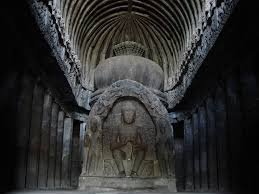
The Vishwakarma
The Vishwakarma (Cave 10) is the only chaitya griha amongst the Buddhist group of caves. It is locally known as Vishwakarma or Sutar ka jhopda carpenters hut. It follows the pattern of construction of Caves 19 and 26 of Ajanta. On stylistic grounds, the date of construction of this cave is assigned to 700 A.D. The chaitya once had a high screen wall, which is ruined at present. At the front is a rock cut court, which is entered through a flight of steps. On either side are pillared porticos with chambers in their back walls. These were probably intended to have subsidiary shrines but not completed. The pillared verandah of the chaitya has a small shrine at either end and a single cell in the far end of the back wall. The corridor columns have massive squarish shafts and ghata pallava (vase and foliage) capitals. The main hall is apsidal on plan and is divided into a central nave and side aisles by 28 octagonal columns with plain bracket capitals. In the apsidal end of the chaitya hall is a stupa on the face of which a colossal 3.30 m high seated Buddha in vyakhyana mudra (teaching posture) is carved. A large Bodhi tree is carved at the back. The hall has a vaulted roof in which ribs have been carved in the rock imitating the wooden ones.

 Other Hindu caves
 The Indra Sabha
 Best Time to Visit
 Ellora Caves
 Festivals
 The Jain caves
 Architecture
 The Dashavatara
 How to reach Ellora by Road
 The Hindu caves
 How to Reach Ellora by Flight
 Who build
 Test your English Language
  What to Eat in Nagaland
 Eye care tips for Computer users
 Weird Fruit Search Tricks Amazing beauty Secrets
 What to Eat in Uttar Pradesh
 Visa and Passport Costliest Video Games Ever Produced
 Amazing Facts You Probably Didnt Know Strangest Prehistoric Creatures To Rule The Earth
 The Best Bulletproof Cars
 Fish Aquarium Rules to play Fencing Most Influential People in the World Rare Cat Breeds From Around The World Reasons Tim Tebow Breaks The Mold
 Reasons To Love The Monsoon Reasons You Should Brush Your Teeth