


Environmental impact
Celebration of Ganesh Chaturthi



Environmental impact
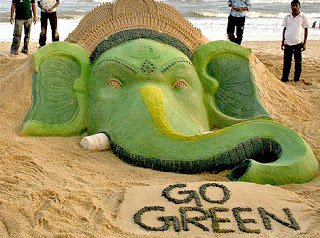
The most serious impact of the festival on the environment is due to the immersion of idols made of Plaster of Paris into lakes, rivers and the sea. Traditionally, the idol was sculpted out of mud taken from nearby one home. After the festival, it was returned to the Earth by immersing it in a nearby water body. This cycle was meant to represent the cycle of creation and dissolution in Nature.However, as the production of Ganesh idols on a commercial basis grew, the earthen or natural clay (shaadu maati in Marathi and banka matti in Telugu) was replaced by Plaster of Paris. Plaster is a manmade material, easier to mould, lighter and less expensive than clay. However, plaster is nonbiodegradable, and insoluble in water. Moreover, the chemical paints used to adorn these plaster idols themselves contain heavy metals like mercury and cadmium, causing water pollution. Also, on immersion, nonbiodegradable accessories that originally adorned the idol accumulate in the layers of sand on the beach.

 Ganesh Chaturthi Decorations
 Ganesh Chaturthi Dry Fruits
 Ganeshji represents auspiciousness
 Sentiments
 Celebration in Kerala
 Ganesh Chaturthi Clothing And Apparels Gifts
 Ganesh Chaturthi Legends
 Names of Ganeshji
 Environmental impact
 Ganesh Chaturthi Cards
 Ganesh Chaturthi Gadgets & Gizmos Gifts
 Ganesh Chaturthi Sweets
 Test your English Language
  Rules to play Wheelchair Tennis Beautiful Glaciers in the World Greatest Fashion Models Worlds Biggest Islands Rules to play Roller Soccer Top Most Powerful Armies In The World Best Gadgets For Summer Travel
 Myth About Animal Famous Party Cities In The World Biggest things in the World
 Benefits of Pomelos Rules to play Equestrianism Most handsome football players and his Hairstyle 2014 Exotic Sports Cars Celebrities Who Had Unbelievable Jobs Great ways to eat Corn
 Greatest Concept Cars Ever Greatest Cricketers of All Time