Crazy Facts About The Universe
Crazy Facts about Space, Planets and Universe.
21. Einsteins Theory of Relativity
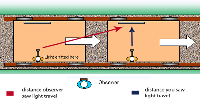
Without getting too complex, Einstein essentially came forward with the revolutionary idea that not only is motion relative, but time is too. In fact, they are linked together. The faster you move, the slower others will perceive that time has passed for you. Why? Well imagine this. As you are sitting in the bus you shine a beam of light at the opposite wall. Lets say in 1 second it covers 2 meters before hitting the other side of the bus. Now, lets think of this from the perspective of the person on the street. To them the bus is also moving so the beam of light actually covers 15 meters in that same second. Why is this weird? Think about it. Here we have an object that just traveled 12 meters farther in the same amount of time
22. Moving Clocks

Everything we just talked about is very relevant to modern technology. In fact, the clocks in onboard computers and navigation equipment have to take into account the effects of relativity. For example, if you measured the time that had elapsed on a fighter pilots wristwatch, you would find that it lagged behind your watch by several nanoseconds.
23. Adding a nanosecond to your life by never climbing stairs

Remember high school physics? Because the force of gravity increases near the surface of the Earth, so does your acceleration which means exactly what youre thinking time slows down. Once again, this is very relevant to modern day society because at different altitudes clocks tick at different speeds. Also, remember that since the earth is rotating, someone standing near the equator is moving faster than someone on the north pole. Once again, their clock is ticking more slowly.
24. Twins Paradox

If you have been keeping up so far then this wont be too much of a leap. The famous twins paradox postulates that if you put one twin on a spaceship that was moving near the speed of light through space and left another on Earth, due to the effects of relativity, the twin in the space ship would return to the planet significantly younger than his Earth bound sibling.
25. Black Holes
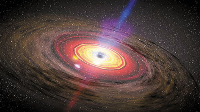
At one point these intergalactic vacuum cleaners were actually super massive stars. When one of those stars dies it generally blows of its gaseous outer layers and the core collapses into an extremely small and dense sphere. Imagine, for example, trying to pick up a tennis ball containing the entire mass of the Sun. The immediate effect of this astronomically high density would be an insanely strong gravitational field. In order to break free from any gravitational field you have to be traveling faster than something known as escape velocity. On Earth spacecraft achieve this by reaching a speed of about 7 miles per second. On some collapsed stars though, they would have to reach a speed faster than 186,000 miles per second which is more than the universal speed limit, meaning nothing not even light could escape.
26. All 6 Billion People On Earth Can Fit Inside An Orange

If I can just be allowed to explain, 99.9% of an atom is just empty space. Well heck, everyone knows that!, I hear you cry. As is the case with many facts we tend only to recognise this point in theory, because we cannot really envisage what an atom is like to look at. It is very small.
To put this point into perspective, if you removed all the empty space from the atoms that make up all the humans on the planet then you could fit all 6 billion of us inside a single orange. Come to think of it some unkind people have called me a waste of space and now its provable!
We can find atoms everywhere, since they are among the fundamental building blocks of the universe. The Sun contains 99.86% of all the mass in the Solar System. The mass of the Sun is approximately 330,000 times greater than that of Earth. It is almost three quarters Hydrogen, whilst most of the remaining mass is Helium.
27. Most Of The Universe Appears To Be Missing
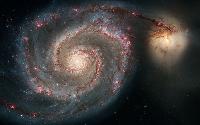
So, lets take stock of where we are here. We have ascertained that the universe is pretty astounding when considered at a vast scale. We have established that the universe consists of atoms. We have also worked out that atoms contain space mostly and a very tiny amount of matter. Leaving aside the worrying fact that we are made of atoms, how much matter is there in the universe? According to the Planck mission team, and based on the standard model of cosmology, ordinary matter accounts for a staggeringly minuscule 4.9% of the total. The rest is 26.8% dark matter and 68.3% dark energy. Im going to obstinately ignore the dark energy, because thats clearly the equivalent of nothing its not matter in any case. Can dark matter give a bit of substance to our existences?
28. Light Does not Always Travel Very Fast

Nothing travels faster than light. Thats something we hear bandied about quite a lot. Another is, Light is a constant. We can measure everything alongside it. Sometimes we hear that light can have its direction of travel altered, e.g. when it passes close to a star. The truth is that light can end up going quite slowly and it is not quite the constant many believe it is. What people mean to say, or should rather express, is that light travels at a constant speed in a vacuum. Without this essential qualification we soon see that light is anything but a constant. In a vacuum light travels at 186,000 miles per second, (300,000 km per second).
29. Electrons Colliding At The Edge Of The Universe Affect Us On Earth Instantaneously
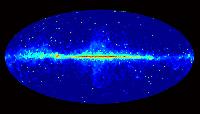
Another simplification of explanations about atoms concerns the
30. You Can Never Use The Past To Predict The Future

At first sight this statement might look like nothing more than an observation about the bleeding obvious were it not for the fact that it hides a deep truth about the structure of the universe.
None of us can predict the future, but Chaos Theory implies that we never will be able to either. For centuries astronomers tried to compare the solar system to an enormous mechanism revolving around the sun something like a gigantic clock.
Unhappily for them all they found out was that their equations never actually mirrored how real planets would travel across space.