Chinese New Year
the meaning of Chinese New Year, how it's celebrated, and what it means to be born in the year .
21. Spring travel
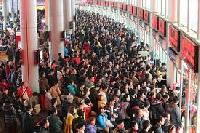
Traditionally, families gather together during the Chinese New Year. In modern China, migrant workers in China travel home to have reunion dinners with their families on Chinese New Years Eve. Owing to the large number of interprovincial travellers, special arrangements were made by railways, buses and airlines starting from 15 days before the New Years Day. This 40 day period is called chunyun, and is known as the worlds largest annual migration.More interurban trips are taken in mainland China in this period than the total population of China.
In Taiwan, spring travel is also a major event. The majority of transportation in western Taiwan is north south direction long distance travel between urbanized north and hometowns in rural south. Transportations in eastern Taiwan and that between Taiwan and islands are less convenient. Cross strait flights between Taiwan and mainland China began in 2003 as part of Three Links, mostly for Taiwanese businessmen to return to Taiwan for the new year.
22. Plants and Flowers
Every traditional Chinese household should also have live blooming plants to symbolize rebirth and new growth. Flowers are believed to be symbolic of wealth and high positions in ones career. Lucky is the home with a plant that blooms on New Years Day, for that foretells a year of prosperity. In more elaborate settings, plum blossoms just starting to bloom are arranged with bamboo and pine sprigs, the grouping symbolizing friends &endash; the plum blossom also signifies reliability and perseverance; the bamboo is known for its compatibility, its utility and its flexible stems for furniture and other articles;the evergreen pine evokes longevity and steadiness. Other highly prized flowers are the pussy willow,azalea, peony and water lily or narcissus.The Chinese firmly believe that without flowers, there would be no formation of any fruits. Therefore, it is of the utmost importance to have flowers and floral decorations.They are the emblems of reawakening of nature, they are also intimately connected with superstition and with the wish for happiness during the ensuing year.
23. Oranges and Tangerines

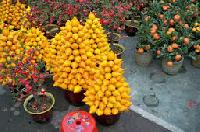
Etiquette dictates that you must bring a bag of oranges and tangerines and enclose a lai see when visiting family or friends anytime during the two week long Chinese New Year celebration. Tangerines with leaves intact assure that ones relationship with the other remains secure. For newlyweds, this represents the branching of the couple into a family with many children. Oranges and tangerines are symbols for abundant happiness.
24. Dumplings

Dumplings are very popular in Northern China. It is one of the main dishes for New Years Eve dinner. Very few people in Southern China serve dumplings in New Years Eve dinner.
25. New Year Cake

It is solid cake made with glutinous rice flour together with some sugar. New Year Cake is popular in Eastern China.
26. Tang Yuan
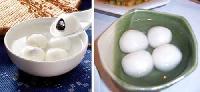
Tang Yuan is small ball made from glutinous rice flour. Glutinous rice flour is mixed with a small amount of water to form balls and is then cooked and served in boiling water. Tang Yuan can be either filled or unfilled. It is traditionally eaten during Yuan Xiao, or the Lantern Festival (the 15th of the first month of the traditional Chinese calendar).
27. LaBa Congee

It is a mixture of rice, nuts, and beans cooked together. LaBa Congee is usually served on LaBa festival which is the 8th day of the last month of the year.
28. New Years Paintings

New Year paintings are put up to decorate houses, carrying best wishes, and creating a happy and prosperous atmosphere at the Spring Festival.The subjects of New Year paintings are often flowers and birds, plump boys (with Guanyin, the Goddess of Mercy and fertility), golden roosters, oxen, ripe fruit and treasure, or other legends and historical stories, showing desires for bountiful harvests and a happy life. The Four Homelands of the New Year Painting are New Year Painting Village in Mianzhu in Sichuan Province, Taohuawu in Suzhou, Yangliuqing in Tianjin, and Weifang in Shandong.
29. Putting Up Paper Cutouts
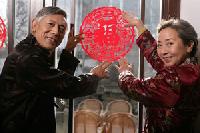
In the past people pasted paper cutouts on windows facing south and north before the Spring Festival. Paper cutouts are still popular with northerners, but people in the south only paste paper cutouts on wedding days.The subjects and themes of paper cutouts are rich, and most of them are characteristic of rural life, because the majority of buyers are peasants. Therefore paper cutouts about farming, weaving, fishing, tending sheep, feeding pigs, or raising chickens are common. Paper cutouts sometimes depict myths and legends and Chinese operas. Also flowers, birds, and Chinese Zodiac creatures are popular paper cutout designs.With their caricaturistic and exaggerated patterns, paper cutouts express the hopes of people looking forward to a better life, and give a merry and prosperous atmosphere to the Festival.