Famous Nurses Who Made History
Famous Nurses Who Made History
11. Mabel Keaton Staupers

Led Battle to End Racial Prejudice in Nursing (1890 to 1989) Color was the greatest obstacle that had to be faced by every black aspiring to become nurse in the early years. Like Mary Eliza Mahony, Mary Seacole, and Susie King Taylor, Mabel Staupers had to win over her skin color. Mabel Staupers fought hard to finally and fully integrate black nurses into the nursing profession in the U.S., at the time wherein every available medical aid was badly needed, during the Great Depression and World War II.
Mabel Staupers started nursing with noteworthy qualifications as she graduated with honors from the Freedmens Hospital School of Nursing in Washington D.C. in 1917. Staupers became surveyor of health needs before she was given a significant position as executive secretary for the Harlem Tuberculosis Committee, a Tuberculosis and Health Association unit in New York, in 1922. As surveyor, she saw more clearly the wide disparity between black and white, with regards to both access to equitable healthcare services and treatment of black nurses in her professions organizations such as the American Nurses Association and National League of Nursing Education. When she became executive secretary of the National Association of Colored Graduate Nurses for 12 years, Staupers built a more stable platform for black nurses in the profession by forming coalitions both in nursing and non nursing communities.
12. Hazel W Johnson Brown

First African American Chief of the Army Nurse Corps (1927 to Present) Named as the first African American Brigadier General of the Army Nurse Corps in 1979, Hazel W. Johnson Brown apparently reached the most honorable rank when she was appointed as the chief of the ANC. She then commanded 7,000 men and women in the Army National Guard and Army Reserves, and overseeing numerous medical centers, free standing clinics, and community hospitals in Germany, Italy, Japan, Korea, Panama, and the United States.
Brig. Gen. Hazel W. Johnson Browns military success started with apparent prejudice, when she was rejected of enrollment at the West Chester School of Nursing. This was the obstacle that she wanted to overcome. Hence, she went off for New York City in 1947, and was admitted in the Harlem Hospital School of Nursing. Her first professional work was at the Philadelphia Veterans Hospital, but enlisted into the Army Nurse Corps in 1955 with the encouragement of colleagues. Hazel swiftly rose from the ranks, accumulating impressive credentials from different positions she held, and finally got to the pinnacle of her career as Chief of ANC, with the rank of Brigadier General.
13. Virginia Avenel Henderson
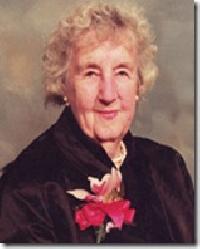
Developed the Nursing Theory (1897 to 1996) Known as the first lady of nursing, Virginia Avenel Henderson can be considered as the most famous nurse of the 20th century, with all her contributions and influence to American and international nursing education, practice, research as well as its implications. She was the woman behind the development of nursing theory, carefully and clearly defining the roles of nurses in health care. Hendersons theory that nurses should aid everyone, sick and well, in the quest for better overall health or peaceful death is recognized as a major contribution to the nursing practice.
Virginia Henderson owed her success to the privilege of being thought and trained in the Army School of Nursing, and the Teachers College in Columbia University for her B.S. and M.A. degrees. She spent her first years in the profession as public health nurse at the Henry Street Settlement as well as in the visiting nurse service in Washington D.C. Henderson also became the first full time nursing instructor at the Norfolk Protestant School of Nursing, and a very active member of the Virginia Nurses Association. While in the teaching profession, Henderson pushed for the inclusion of psychiatric nursing in Virginia States nursing education in 1929.
14. Christiane Reimann

International Council of Nurses First Full Time Executive Secretary (1887 to 1979) The prestigious Christiane Reimann Prize, which has been awarded to just a very few achievers in the nursing field yet, was named after her. Christiane Reimann was a Danish born woman who received her nursing degree at the Copenhagens Bispebjerg Hospital in 1916. And in 1925, only 9 years later, she became the very first paid full time executive secretary of the International Council of Nurses.
Christiane Reimann was an accomplished nurse, who unselfishly tapped from her own funds to further ICNs goals. Not only did she generously shared monetary funds to the ICN, but also served as the brain behind many key ICN programs, among which is the councils official journal International Nursing Review. Reimann also spent her energy travelling the world to seek more national nurses associations to join the international council, and enable the principles of ICN to be integrated in nursing practice in different countries. The fruitages of her efforts were priceless. It stimulated many of the countries she visited to establish educational programs for nurses. Others having no NNA yet, like China, were motivated to build their own.
Reiman served as ICNs executive secretary until 1934, and spent the rest of her years in this world living a much simpler life at her farm in Syracuse, Italy. And on 1979, Christiane Reimann faced death at the age of 92.
15. Sophie Mannerheim
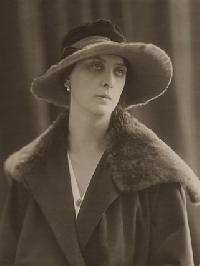
The Baroness & Instrument to Finlands Modern Nursing (1863 to 1928) A fruit of modern nursing founder Florence Nightingales school at St. Thomas Hospital, in London, Sofia Sophie Mannerheim utilized her gained nursing knowledge and skills in her own country, Finland. Before journeying into the world or nursing, though, Sophie first worked as a bank employee for 6 years, and got into an 8 year long marriage in 1896.
Mannerheims divorce gave her the opportunity to enter Nightingales school. When back in Finland, she was given the responsibility of a head nurse of Helsinki Surgical Hospital. Later on, she became president of the Finnish Nurses Association, which she handled for 24 years. Her success in the nursing field extended to the international community when she was elected president of the International Council of Nurses or ICN. Her accomplishments also included co founding of Helsinkis Childrens Hospital, and of the Mannerheim League for Childrens Welfare.
Sofia Mannerheim, a baroness who came from a noble family and sister to former Finnish President Carl Gustaf Mannerheim, died on September 1, 1928.
16. Edith Cavell
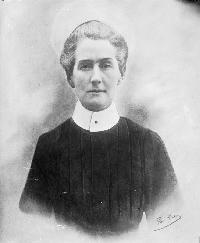
Belgiums Nursing Pioneer & Nurse Hero (1965 to 1915) Edith Louisa Cavell served the Red Cross in the face of death during World War II. Cavell, a British nurse was matron of the Brussels Berkendael Institute, which was then converted into Red Cross hospital, when Central member country Germany invaded Belgium. Her duty was to care for patients, regardless of their nationality, not looking into whether they were from the Central or Allied Forces. But her patriotism, which became more evident in carrying on her duty led to her apparent death.
During her trial, Edith Cavell admitted of helping 200 soldiers, whom she thought were still capable of reuniting with the Allied forces to fight. Wounded Allied soldiers were treated and helped escape to the neutral Holland, along with other non wounded men. Only a tattered postcard sent as sign of gratitude by a British soldier, and her confession, served as evidence against Cavell. At the dawn of October 12, 1915, Edith Cavell, still in her nursing uniform, and an aide named Philippe Baucg were executed through firing squad at the outskirts of Brussels for treason.
17. Linda Richards
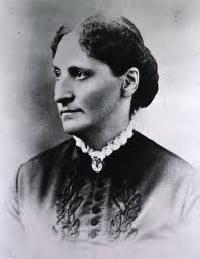
The First Trained American Female Nurse (1841 to 1930) Malinda Anne Judson Richards, Americas first trained female nurse was moved to enter the nursing profession due to the death of her parents from tuberculosis. Although she already got informal training from her mothers physician, Richards pursued teaching. It was only after the death of her fianc
18. Sarah Emma Edmonds

The male nurse (1841 to 1898) Being male was not a dream for Sarah Emma Edmondson, but a life she had to live since childhood to escape mistreatment from her father and to be able to serve her adopted country, the United States of America. Emma left New Brunswick, her homeland, to flee her abusive father who wanted a son, not a daughter. She was in New England, when she answered the call for Union enlisters. After four tries, Emma succeeded to enter the Union Army as Private Franklin Flint Thompson, a male nurse in the Civil War.
Franklin Thompson began serving at the hospital unit of the 2nd Michigan Volunteers on April 25, 1861. Emma had no problem maintaining masculine masquerade since shes been doing it almost all her life already. But with the death of James Vesey, a friend back in Canada, on patrol, and the need of intelligence agent for McClellan changed Emmas life forever. She volunteered and impressed the staff with all the things she gained knowledge of by herself about weaponry, tactics, local geography and military personalities. Even without any military experience, Frank (Emma) got the position as spy of the Union Army.
19. Anna Caroline Maxwell

Founder of the Army Nurse Corps (1851 to 1929) Known as the American Florence Nightingale, Anna Caroline Maxwell bravely cared for wounded men, improved sanitary conditions of military hospitals, and trained nurses for care during the Spanish American War. Her intelligence and experience from years in the nursing profession equipped Maxwell for the enormous task during this chaotic time.
Anna Maxwell started off at the Training School of the Boston City Hospital in 1876. Five years later, she assumed leadership of the Boston Training School for Nurses, and in 1889 shared her knowledge to the students at St. Lukes Hospital. Maxwells academic success reached the New York City, when she developed a nursing program for the areas Presbyterian Hospital. She remained 30 years with the school, presiding over its partnership with Teachers College, which is now known as the Columbia University. There, she was able to develop 5 year nursing diploma as well as a Bachelor of Science Degree.
20. Ruby Bradley

Most Decorated Woman in US Military (1907 to 2002) Col. Ruby Bradley of the Army Nurse Corps was the most highly decorated army nurse, receiving 34 medals and citations of bravery for her military service during the Japanese and Korean War, on World War II. Her awards included Legion of Merit Medals, Bronze Stars, Presidential Emblems, WWII Victory Medal, U.N. Service Medal, and Florence Nightingale Medal.
Bradley began her service in the Army Nurse Corps as surgical Nurse in 1934. Her risky service followed on 1941, while assigned at Camp John Hay, Philippines. Only three weeks after the Japanese attacked Pearl Harbor, Bradley was captured, and tended to fellow captives after being moved to Santo Tomas Interment Camp on 1943, in Manila. There, she and several other nurses were given the name Angels in Fatigues for feeding starving children and risking their lives in smuggling surgical equipments into the POW camp so as to provide medical aid. The U.S. Army liberated Bradley and the rest of the captives from the Japanese three years later, and then, she headed back home to West Virginia. However, military service has not yet ended in the Philippines for Bradley. She went back to the battlefield as chief nurse of the 171st Evacuation Hospital during the Korean War only after 5 years. In 1951, Bradley became chief nurse for the Eight Army, shouldered the responsibility of supervising 500 Army Nurses all over Korea, wherein she had to face near death situations while ensuring the sick and wounded were safe. Ruby Bradley managed to escape 100,000 Chinese soldiers holding guns on her back, and ambulance exploding right after shes gone off it.