Bullet Train
Bullet train refer toThe Shinkansen high speed trains of Japan.
11. Public versus private funding Japan

Toshifumi Ishiya from the Japan International Transport Institute spoke at length about private rail transit operators who play a key role in providing urban transit service in the Tokyo metropolis. Most private operators in Japan do not receive any operating subsidy from the government. However, their revenue streams are more diverse than just the fare box revenue. Many rail transit operators also developed land along the rail corridors and transit stations and were able to generate significant revenue from developed land uses, such as housing and recreation. This helped keep private transit operators profitable and free of government subsidies.Mr. Ishiya also spoke of the costbsharing formulas between central and local governments for capital expenditures in public transit. The recent Japanese experience in expanding urban and regional transit involves subsidies amounting to 35 per cent of the capital cost provided for by both central and local governments. Even the expansion of the high-speed rail service is subsidised partially by the local governments because they eventually benefit from improved accessibility resulting in higher local tax revenues.Even more important is the lesson about integrated transit service in the Tokyo region where privately and publically operated trains running above and underground share tracks, transit stations, fares, and fare collection systems. It is important for the commuter to avoid the hassles of transfers from one system to another, warned Mr. Ishiya. The Japanese solution is seamless integration of transit service where the commuter focuses on the journey and not on the jurisdictional constraints of transit operators.
Japan, though, is not alone in integrating diverse urban transit systems. After the unification of Berlin, transit systems from East and West Germany were integrated to offer seamless transit service to all citizens of the United Berlin. The S Bahn (surface rail) and U Bahn (underground rail) were integrated across Berlin overcoming challenges resulting from different rolling stock, different technology, and at times, different rail gauges.
Japan, though, is not alone in integrating diverse urban transit systems. After the unification of Berlin, transit systems from East and West Germany were integrated to offer seamless transit service to all citizens of the United Berlin. The S Bahn (surface rail) and U Bahn (underground rail) were integrated across Berlin overcoming challenges resulting from different rolling stock, different technology, and at times, different rail gauges.
12. China High Speed Train Bullet Train

High speed trains (G, D, C trains in China) run much faster than the normal ones. As well as traveling at speeds of upto 400km/h, the bullet trains are operated by advanced technological communication systems.China has so many worthy destinations, many of which are far from each, and in most cases, tourists have no choice but to take an airplane. The high speed railways greatly shorten journeys in this vast land, making long distance trips more convenient, time saving and feasible. For instance, with one bullet train ticket, you can reach Guangzhou from Beijing in 8 hours, however, this 2,000 km (about 1,243 mi) journey takes nearly 24 hours by normal ones.
Now people generally prefer to travel by high speed trains, which should be attributed to its advantages:
1. Fast: The present speed is higher than 200km/h, lessening the journey duration. For example, from Beijing to Shanghai, a distance of over 1,200 km (about 746 mi). The journey is shortened to 5 hours from 15 hours if you buy bullet train ticket instead of other tickets.
2. Punctual: Less influence by weather, they usually arrive at their destinations on time. By contrast, a bus may be delayed because of traffic jams or bad road conditions. Flights may be cancelled because for the bad weather.
3. Comfortable and Convenient: Seating is very comfortable, and the facilities can better meet passengers demands. Bullet trains are scheduled more frequently for many journeys, so it is easy to buy tickets and passengers dont need to wait too long.
High speed trains also overcome the disadvantages of buses which face severe safety problems especially for those overnight ones. On the other hand, considering the airports which are usually located far from the city center and the long procedure for taking a flight, travel by the bullet train can be more time saving and convenient, especially for a journey within 5 hours.
Now people generally prefer to travel by high speed trains, which should be attributed to its advantages:
1. Fast: The present speed is higher than 200km/h, lessening the journey duration. For example, from Beijing to Shanghai, a distance of over 1,200 km (about 746 mi). The journey is shortened to 5 hours from 15 hours if you buy bullet train ticket instead of other tickets.
2. Punctual: Less influence by weather, they usually arrive at their destinations on time. By contrast, a bus may be delayed because of traffic jams or bad road conditions. Flights may be cancelled because for the bad weather.
3. Comfortable and Convenient: Seating is very comfortable, and the facilities can better meet passengers demands. Bullet trains are scheduled more frequently for many journeys, so it is easy to buy tickets and passengers dont need to wait too long.
High speed trains also overcome the disadvantages of buses which face severe safety problems especially for those overnight ones. On the other hand, considering the airports which are usually located far from the city center and the long procedure for taking a flight, travel by the bullet train can be more time saving and convenient, especially for a journey within 5 hours.
13. China Train Types
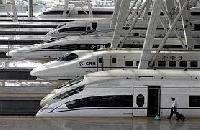
Chinese trains are divided according to their speed into various classes, identified with different letters and numbers. The letters refer to different classes:
G High Speed Electric Multiple Units (EMU) Train
This is the fastest running for long distance in China, the top speed of which could reach 350km/h. Currently, the G train could finish the 1,068-kilometers Wuhan Guangzhou High Speed Railway in 3 hours, the 301 kilometers Shanghai Nanjing High Speed Railway in 73 minutes and the 458 kilometers Zhengzhou Xian High speed Railway in 2 hours.
C Intercity EMU
This is also the fastest kind, but runs for short travel distance between two nearby cities, such as the 120 kilomters Beijing Tianjin Intercity Railway.
D Electric Multiple Units (EMU)
This type is also called Hexiehao or bullet trains in China. The designed top speed is 250km/h. They have been widely used for serving fast and frequent transport between main cities, such as Beijing-Shanghai, Shanghai-Suzhou and Shenzhen-Guangzhou.
Z Direct Express
This type with a top speed of 160km/h is also an efficient transport for long distance travel. Generally, they run directly to the destination or with some stops on the way. On the other hand, some are equipped with only soft sleepers and soft seats.
T Express
This kind has limited stops on the routes, mainly in these major cities. The highest speed is 140km/h. Almost every T series is equipped with soft sleeper, soft seat, hard sleeper and hard seat.
K Fast
This series with a top speed of 120km/h has more stops than the T ones. They are equipped with air condition and the four classes of berths.
L Temporary
This series is in operation only during the peak travel time, such Chinese Spring Festival and the National Holiday. They will not be listed in the official fixed schedule. It is not advised to take this type if you have other options as they are routinely subject to delays.
Y Tourist
This type is for the convenience of tourist and their destinations are the popular tourism cities. For example, there are Y trains departing between Beijing and Qinhuangdao. Its speed is the same as the accommodation type.
S Suburban
Running at 100km/h as the highest speed, this type is used for communicating city center and the suburban areas. It has no soft seats and sleeper berths as it only travels within short distance in day times. Currently, the S2 series travel between Beijing North Railway Station and the Yanqing County in the northern suburb of the city with stops at Qinghuayuan, Nankou, and Badaling Great Wall.
G High Speed Electric Multiple Units (EMU) Train
This is the fastest running for long distance in China, the top speed of which could reach 350km/h. Currently, the G train could finish the 1,068-kilometers Wuhan Guangzhou High Speed Railway in 3 hours, the 301 kilometers Shanghai Nanjing High Speed Railway in 73 minutes and the 458 kilometers Zhengzhou Xian High speed Railway in 2 hours.
C Intercity EMU
This is also the fastest kind, but runs for short travel distance between two nearby cities, such as the 120 kilomters Beijing Tianjin Intercity Railway.
D Electric Multiple Units (EMU)
This type is also called Hexiehao or bullet trains in China. The designed top speed is 250km/h. They have been widely used for serving fast and frequent transport between main cities, such as Beijing-Shanghai, Shanghai-Suzhou and Shenzhen-Guangzhou.
Z Direct Express
This type with a top speed of 160km/h is also an efficient transport for long distance travel. Generally, they run directly to the destination or with some stops on the way. On the other hand, some are equipped with only soft sleepers and soft seats.
T Express
This kind has limited stops on the routes, mainly in these major cities. The highest speed is 140km/h. Almost every T series is equipped with soft sleeper, soft seat, hard sleeper and hard seat.
K Fast
This series with a top speed of 120km/h has more stops than the T ones. They are equipped with air condition and the four classes of berths.
L Temporary
This series is in operation only during the peak travel time, such Chinese Spring Festival and the National Holiday. They will not be listed in the official fixed schedule. It is not advised to take this type if you have other options as they are routinely subject to delays.
Y Tourist
This type is for the convenience of tourist and their destinations are the popular tourism cities. For example, there are Y trains departing between Beijing and Qinhuangdao. Its speed is the same as the accommodation type.
S Suburban
Running at 100km/h as the highest speed, this type is used for communicating city center and the suburban areas. It has no soft seats and sleeper berths as it only travels within short distance in day times. Currently, the S2 series travel between Beijing North Railway Station and the Yanqing County in the northern suburb of the city with stops at Qinghuayuan, Nankou, and Badaling Great Wall.
14. upcomming china

Chinas Bullet Trains Creating New Kind of Suburbia
Chinas new and aggressively expanding High Speed Railbullet train system is having an unintended consequence: its proving an economic boon to outlying cities along the line.A new collaborative study by Tsinghua University in Beijing considered Chinas MIT and the University of California Los Angeles has uncovered an unexpected benefit of Chinas new high speed rail network they are creating a new category of suburbia in China.
According to the studys co-author, Matthew Kahn, a professor at UCLAs Institute of the Environment and Sustainability, so called second tier cities that fall into a sweet spot of 60-470 miles away from the connecting mega city, are seeing an economic payoff from workers who can now commute by bullet train into cities like Beijing and Shenzhen when it was simply too far to drive and too close to justify flying commercially. Such second tier cities include Qinhuangdao, Cangzhou and Yangquan. The authors note in their study that high speed rail gives these distant cities big city benefits without downsides like high housing costs, overcrowding, or air and water pollution.Siqi Zheng, a professor with the department of construction management and the Hang Lung Center for Real Estate at Tsinghua University in Beijing, observed that, Chinas bullet trains facilitate market integration and mitigate the cost of megacity growth.Bullet trains simultaneously alleviate some of the congestion costs associated with urban growth in the megacities and trigger the growth of the nearby second tier cities,said. With overpopulation in the developing world, theres a concern that megacities are too attractive and could soon be overrun by rural residents moving to urban areas. The bullet trains could act as a safety valve by encouraging people to move to second tier cities, improving the quality of life in both areas and creating more sustainable growth.
The study discovered that Chinese companies are already starting to relocate to less expensive offices out in these second tier cities. The dealmakers of a business would remain in the mega city, while other employees could be relocated and only need to make the commute into the city on a weekly or monthly basis. That would have big economic pay off for the company and employees who could enjoy less expensive housing and living cots.Part of the purpose of the study was to better understand these unintended consequences in the light of Californias plans to build its own HSR system linking San Francisco/Sacramento with the Los Angeles/San Diego mega-regions. In Professor Kahns view, cities like Palmdale and even Bakersfield would benefit as second tier cities, along with Modesto, Stockton and Gilroy, the garlic capital of the world, on the northern end of the line similarly benefiting.What the study didnt identify was the cost effectiveness of Californias HSR plan. According to the UCLA press report, the authors believemany of the same side effects seen in China are likely to hold true for bullet trains anywhere.
Last Mile Solutions What HSR also represents is the opportunity to provide commuters with last mile transportation solutions such as shared station cars like the MIT/GM developed all electric Hiriko being built in Spain. Local transit systems would also benefit,subways, BRT systems, and the like.On demand transit from conventional shuttle and taxi services to vehicles like Rinspeeds MicroMAX urban swarm vehicle will find a role. Finally, there likely be a role for electric assist two wheelers, as well as conventional bicycles that can get the commuter from home to the station and from the station to their final destination. It is in these relative short distance, high demand, situations where electric vehicles of all shapes and sizes will come into play, another positive benefit of a well run HSR system.
Chinas new and aggressively expanding High Speed Railbullet train system is having an unintended consequence: its proving an economic boon to outlying cities along the line.A new collaborative study by Tsinghua University in Beijing considered Chinas MIT and the University of California Los Angeles has uncovered an unexpected benefit of Chinas new high speed rail network they are creating a new category of suburbia in China.
According to the studys co-author, Matthew Kahn, a professor at UCLAs Institute of the Environment and Sustainability, so called second tier cities that fall into a sweet spot of 60-470 miles away from the connecting mega city, are seeing an economic payoff from workers who can now commute by bullet train into cities like Beijing and Shenzhen when it was simply too far to drive and too close to justify flying commercially. Such second tier cities include Qinhuangdao, Cangzhou and Yangquan. The authors note in their study that high speed rail gives these distant cities big city benefits without downsides like high housing costs, overcrowding, or air and water pollution.Siqi Zheng, a professor with the department of construction management and the Hang Lung Center for Real Estate at Tsinghua University in Beijing, observed that, Chinas bullet trains facilitate market integration and mitigate the cost of megacity growth.Bullet trains simultaneously alleviate some of the congestion costs associated with urban growth in the megacities and trigger the growth of the nearby second tier cities,said. With overpopulation in the developing world, theres a concern that megacities are too attractive and could soon be overrun by rural residents moving to urban areas. The bullet trains could act as a safety valve by encouraging people to move to second tier cities, improving the quality of life in both areas and creating more sustainable growth.
The study discovered that Chinese companies are already starting to relocate to less expensive offices out in these second tier cities. The dealmakers of a business would remain in the mega city, while other employees could be relocated and only need to make the commute into the city on a weekly or monthly basis. That would have big economic pay off for the company and employees who could enjoy less expensive housing and living cots.Part of the purpose of the study was to better understand these unintended consequences in the light of Californias plans to build its own HSR system linking San Francisco/Sacramento with the Los Angeles/San Diego mega-regions. In Professor Kahns view, cities like Palmdale and even Bakersfield would benefit as second tier cities, along with Modesto, Stockton and Gilroy, the garlic capital of the world, on the northern end of the line similarly benefiting.What the study didnt identify was the cost effectiveness of Californias HSR plan. According to the UCLA press report, the authors believemany of the same side effects seen in China are likely to hold true for bullet trains anywhere.
Last Mile Solutions What HSR also represents is the opportunity to provide commuters with last mile transportation solutions such as shared station cars like the MIT/GM developed all electric Hiriko being built in Spain. Local transit systems would also benefit,subways, BRT systems, and the like.On demand transit from conventional shuttle and taxi services to vehicles like Rinspeeds MicroMAX urban swarm vehicle will find a role. Finally, there likely be a role for electric assist two wheelers, as well as conventional bicycles that can get the commuter from home to the station and from the station to their final destination. It is in these relative short distance, high demand, situations where electric vehicles of all shapes and sizes will come into play, another positive benefit of a well run HSR system.
15. India
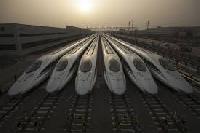
The speed of Indian trains has remained stagnant since the 80s. We thought about increasing the speed in the past, but the sixth pay commissions burden had shifted our focus to freight.
But the world has moved on. Even countries such as Taiwan, Vietnam, Monaco and Tunisia are at various stages of developing a high-speed rail network. For us, there will now be two sets of trains. One is a semi high-speed system that will happen soon. By end of this calendar year, we will have a train running between Delhi and Agra at 160 km per hour.We will merely tweak the system and our investments for the Delhi-Agra corridor will be less than Rs 10 crore. Then, we have envisioned the High Speed Rail System, which is a slightly longer term vision. The Rail Budget has already given the seed money of Rs 100 crore for the Mumbai-Ahmedabad high-speed rail corridor, and we should complete the project in eight years.
Various modalities for private sector participation will be weighed in. Multilateral agencies are also showing interest in the project. When India had its first coloured TV sets, there were sceptics. When mobile phones came, many asked their utility. Bullet train is no different
Various modalities for private sector participation will be weighed in. Multilateral agencies are also showing interest in the project. When India had its first coloured TV sets, there were sceptics. When mobile phones came, many asked their utility. Bullet train is no different
16. Future of bullet train
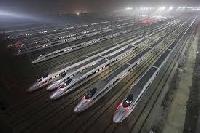
The Future of Train Travel Life in Hyper Speed
Japan, inventor of the world?s first bullet train, recently unveiled plans for an even faster and more radical train model a floating train, powered by magnets, that will travel 100 mph faster than current bullet trains (about 300 mph). The maglev train, standing for ?magnetic levitation,? will run between Tokyo and Osaka, an estimated distance of 315 miles, cost $64 billion, and be completed by 2045.High speed rail has already revolutionized national and international transportation in many parts of the world for example, China has a maglev that already goes 270mph and now high-speed is transitioning into hyper speed. Last year, we reported that Elon Musk, CEO of SpaceX and co-founder of both PayPal and Tesla Motors, shared with the public his desire to patent a new mode of transportation the ?Hyperloop? that would get passengers from San Francisco to LA in only 30 minutes.
The ?Hyperloop? would, according to Musk, ?never crash, be immune to weather, go twice as fast as an airplane, four times as fast as a bullet train, and to top it off run completely on solar power.? While this sounds like a too good to be true idea straight out of a science fiction novel, our friends at Business Insider believe that there?s no reason the Hyperloop couldn?t become reality with enough political and financial backing but that?s quite the caveat.In fact, magnetic levitation technology in trains has been tossed around in the scientific community and even proposed as an alternative to air travel for decades.
In 1972, physicist R.M. Salter detailed an underground tube system that could transport people from Los Angeles to New York City in a mind boggling 21 minutes. The Very High Speed Transit System would consist of ?electromagnetically levitated and propelled cars in an evacuated tunnel? underground that would function as a sealed vacuum and zip back and forth across the country at about 14,000 miles per hour.
So although the likelihood that hyper speed could soon become the new means of travel sounds unlikely, it still offers lots for the imagination. High-speed and hyper speed rail has the very real capability of bringing cities together like never before. What?s more, it would necessitate a whole new kind of infrastructure to support it. What would such a hyper-speed station look like? How would it affect other types of transportation, or change the face of our cities? Let us know what you think in the comments below.
This article lists planned or proposed high-speed rail projects, arranged by country. Although many nations have done preliminary feasibility studies, many lines are eventually shelved or postponed due to high cost, and only a few nations of those proposing are actively building high speed rail lines. Planned or proposed lines are therefore separated here from lines that are under construction, some nations having both. High speed rail is public transport by rail at speeds in excess of 200 km/h (125 mph).
As Narendra Modi spoke of bullet trains, he ignited the imagination of a billion plus country and brought the subject of high speed trains to the centre of discussions. High speed railways (HSR) is a type of rail transport that operates significantly faster (200-300kmh) than the traditional rail traffic. The first such system began its operations in Japan in 1964 and was widely known as the bullet train. In India, the subject was first brought into discussion in late 80's However budget constraints and feasibility had put the idea in cold storage. High speed trains are indeed a costly affair with the cost to lay each km coming to more than 100 crores. At such a cost even to start building a nominal network of 400-500 KMs between some of the proposed corridors will cost a bomb. And it is not just India where it has been perceived to be costly across the globe even in a resourceful country like the US there are debates about its sustainability.
However in recent years there has been a lot of research that has gone into the feasibility and sustainability aspect of HSRs. In one such report ?high speed rail and sustainability? by UIC(the International Union of Railways) done to find out the feasibility and sustainability of these rails in California, USA, many interesting findings in favour of high speed rails have emerged. Some of them are as relevant to India as it is for the United States.
Japan, inventor of the world?s first bullet train, recently unveiled plans for an even faster and more radical train model a floating train, powered by magnets, that will travel 100 mph faster than current bullet trains (about 300 mph). The maglev train, standing for ?magnetic levitation,? will run between Tokyo and Osaka, an estimated distance of 315 miles, cost $64 billion, and be completed by 2045.High speed rail has already revolutionized national and international transportation in many parts of the world for example, China has a maglev that already goes 270mph and now high-speed is transitioning into hyper speed. Last year, we reported that Elon Musk, CEO of SpaceX and co-founder of both PayPal and Tesla Motors, shared with the public his desire to patent a new mode of transportation the ?Hyperloop? that would get passengers from San Francisco to LA in only 30 minutes.
The ?Hyperloop? would, according to Musk, ?never crash, be immune to weather, go twice as fast as an airplane, four times as fast as a bullet train, and to top it off run completely on solar power.? While this sounds like a too good to be true idea straight out of a science fiction novel, our friends at Business Insider believe that there?s no reason the Hyperloop couldn?t become reality with enough political and financial backing but that?s quite the caveat.In fact, magnetic levitation technology in trains has been tossed around in the scientific community and even proposed as an alternative to air travel for decades.
In 1972, physicist R.M. Salter detailed an underground tube system that could transport people from Los Angeles to New York City in a mind boggling 21 minutes. The Very High Speed Transit System would consist of ?electromagnetically levitated and propelled cars in an evacuated tunnel? underground that would function as a sealed vacuum and zip back and forth across the country at about 14,000 miles per hour.
So although the likelihood that hyper speed could soon become the new means of travel sounds unlikely, it still offers lots for the imagination. High-speed and hyper speed rail has the very real capability of bringing cities together like never before. What?s more, it would necessitate a whole new kind of infrastructure to support it. What would such a hyper-speed station look like? How would it affect other types of transportation, or change the face of our cities? Let us know what you think in the comments below.
This article lists planned or proposed high-speed rail projects, arranged by country. Although many nations have done preliminary feasibility studies, many lines are eventually shelved or postponed due to high cost, and only a few nations of those proposing are actively building high speed rail lines. Planned or proposed lines are therefore separated here from lines that are under construction, some nations having both. High speed rail is public transport by rail at speeds in excess of 200 km/h (125 mph).
As Narendra Modi spoke of bullet trains, he ignited the imagination of a billion plus country and brought the subject of high speed trains to the centre of discussions. High speed railways (HSR) is a type of rail transport that operates significantly faster (200-300kmh) than the traditional rail traffic. The first such system began its operations in Japan in 1964 and was widely known as the bullet train. In India, the subject was first brought into discussion in late 80's However budget constraints and feasibility had put the idea in cold storage. High speed trains are indeed a costly affair with the cost to lay each km coming to more than 100 crores. At such a cost even to start building a nominal network of 400-500 KMs between some of the proposed corridors will cost a bomb. And it is not just India where it has been perceived to be costly across the globe even in a resourceful country like the US there are debates about its sustainability.
However in recent years there has been a lot of research that has gone into the feasibility and sustainability aspect of HSRs. In one such report ?high speed rail and sustainability? by UIC(the International Union of Railways) done to find out the feasibility and sustainability of these rails in California, USA, many interesting findings in favour of high speed rails have emerged. Some of them are as relevant to India as it is for the United States.
17. Competition with Air

Over the past decades, passenger transport has undergone important changes concerning the modal distribution of demand. The dominant position of the railways began to lose its leading foothold in favour of the plane, for long distances, and of the private vehicle, for shorter distances. This has been as a result of the loss of competitiveness of the traditional train in relation to other transportation services, originating from travel times far superior to those of alternative modes.
In this context, the high speed train was introduced as a new form of understanding railway transport, notably improving the quality of service offered. This investment will affect the generalised costs related to the alternatives and may generate a redistribution of journeys between them, varying the existing modal distribution. The aim of this article is to evaluate the potential of the future high speed train to compete with current demand for the airline service in Spain. The physical and supply characteristics of existing transport portray the Madrid Barcelona route as an optimal setting for this aim. Firstly, it will connect the two capital cities with the greatest number of inhabitants in the country, with 4.7 million inhabitants in the case of Barcelona and 5.1 million in Madrid. On the other hand, the 620 kilometres between them suppose an extremely interesting line for a high speed investment,reducing the length of the train journey from the current approximately six hours to two and a half or three hours, thus converting it into the fastest land transport on this route. The impact of this investment on the demand for airline travel is quite uncertain and of great interest, given that the run analysed offers the frequency of the most competitive flights in the country, reaching timetables with departures every 15 minutes. The potential capacity of the future high speed train to compete on this market is analysed in this article. Demand modelling is developed in a hypothetical context, allowing for this alternative to be characterised, in spite of it not being available in reality. Experimental design techniques are applied which, based on the information collected, will allow for the estimation of a probabilistic choice model, so as to collect and characterise the preferences of passengers concerning alternatives for travel. With this information, it will be possible to predict the behaviour of passengers in the near future and to simulate different policy options for transport supply. The monetary value of the different types of time associated travel is also derived. The expansive policy predicted within Europe in high speed infrastructures supposes the commitment of a huge amount of resources. Therefore, it is important to have the necessary information available so that this allocation may be efficiently achieved. In this sense, the results of this article may be extended to other contexts.
In this context, the high speed train was introduced as a new form of understanding railway transport, notably improving the quality of service offered. This investment will affect the generalised costs related to the alternatives and may generate a redistribution of journeys between them, varying the existing modal distribution. The aim of this article is to evaluate the potential of the future high speed train to compete with current demand for the airline service in Spain. The physical and supply characteristics of existing transport portray the Madrid Barcelona route as an optimal setting for this aim. Firstly, it will connect the two capital cities with the greatest number of inhabitants in the country, with 4.7 million inhabitants in the case of Barcelona and 5.1 million in Madrid. On the other hand, the 620 kilometres between them suppose an extremely interesting line for a high speed investment,reducing the length of the train journey from the current approximately six hours to two and a half or three hours, thus converting it into the fastest land transport on this route. The impact of this investment on the demand for airline travel is quite uncertain and of great interest, given that the run analysed offers the frequency of the most competitive flights in the country, reaching timetables with departures every 15 minutes. The potential capacity of the future high speed train to compete on this market is analysed in this article. Demand modelling is developed in a hypothetical context, allowing for this alternative to be characterised, in spite of it not being available in reality. Experimental design techniques are applied which, based on the information collected, will allow for the estimation of a probabilistic choice model, so as to collect and characterise the preferences of passengers concerning alternatives for travel. With this information, it will be possible to predict the behaviour of passengers in the near future and to simulate different policy options for transport supply. The monetary value of the different types of time associated travel is also derived. The expansive policy predicted within Europe in high speed infrastructures supposes the commitment of a huge amount of resources. Therefore, it is important to have the necessary information available so that this allocation may be efficiently achieved. In this sense, the results of this article may be extended to other contexts.
18. Career in bullet train

Millions of jobs created to build and operate the new national HSR system
Jobs will be created across numerous fields with opportunities in the planning, design and construction of track infrastructure and new train stations across America.Additional jobs will be created in the management and operations of stations, trains, and track infrastructure.There will also be jobs created through a new industrial boom in the design and manufacturing of high speed trains and all the components going into a train. Additional jobs will be created nationwide in real estate with transit oriented developments around the rail stations.
Jobs will be created across numerous fields with opportunities in the planning, design and construction of track infrastructure and new train stations across America.Additional jobs will be created in the management and operations of stations, trains, and track infrastructure.There will also be jobs created through a new industrial boom in the design and manufacturing of high speed trains and all the components going into a train. Additional jobs will be created nationwide in real estate with transit oriented developments around the rail stations.
19. Environmental objections in path of bullet train California

The California bullet train is promoted as an important environmental investment for the future, but over the next decade the heavy construction project would potentially harm air quality, aquatic life and endangered species across the Central Valley.Eleven endangered species, including the San Joaquin kit fox, would be affected, according to federal biologists. Massive emissions from diesel powered heavy equipment could foul the already filthy air. Dozens of rivers, canals and wetlands fed from the rugged peaks of the Sierra Nevada would be crossed, creating other knotty issues.A wide array of state and federal agencies is examining those effects and, over the next several months, will issue scientific findings that could affect the cost and schedule of construction. Beyond the regulators, environmental lawsuits brought by the powerful California agriculture industry are threatening to further delay work.The state rail authority is trying to push ahead with an urgent plan to start construction of a 130 mile segment from Madera to Bakersfield as early as December, arguing that any delays could put more than $2 billion of federal funding at risk. Even if the Legislature appropriates the states share of money this summer, the construction schedule will depend on friendly and quick decisions by often tough regulators.Among the most difficult issues will be air quality, which is regulated across eight counties by the San Joaquin Valley Air Pollution Control District. The district worries that the construction project would exacerbate already problematic levels of nitrogen oxides, particulates and volatile compounds.
Trains, even ones that creep along powered by diesel engines, are inherently efficient ways of moving people and cargo. This has to do with factors such as wind resistance (one cargo train has less wind to fight than an equivalent 280 trucks) as well as the fact that steel wheels slide more easily on steel tracks than rubber wheels do on pavement.
As oil prices spiked last summer and major airlines started adding fuel surcharges, an increasing number of Canadians were driven to the rails. VIA Rail recorded a 10 percent jump in ridership from the previous year and increased revenue of $14 million. As accessible oil supplies dwindle, the trend is likely to become more acute, especially if passengers can get from Toronto to Montreal in two hours by train as opposed to five. According to an environmental impact study put forward by the CHSRA, Californias proposed system will save 12.7 million barrels of oil by 2030 by reducing air and auto travel.
In France and Japan, HSR enjoys an extremely high safety record. Says Langan:
Trains, even ones that creep along powered by diesel engines, are inherently efficient ways of moving people and cargo. This has to do with factors such as wind resistance (one cargo train has less wind to fight than an equivalent 280 trucks) as well as the fact that steel wheels slide more easily on steel tracks than rubber wheels do on pavement.
As oil prices spiked last summer and major airlines started adding fuel surcharges, an increasing number of Canadians were driven to the rails. VIA Rail recorded a 10 percent jump in ridership from the previous year and increased revenue of $14 million. As accessible oil supplies dwindle, the trend is likely to become more acute, especially if passengers can get from Toronto to Montreal in two hours by train as opposed to five. According to an environmental impact study put forward by the CHSRA, Californias proposed system will save 12.7 million barrels of oil by 2030 by reducing air and auto travel.
In France and Japan, HSR enjoys an extremely high safety record. Says Langan:
20. Economic Impact

A new study suggests high speed rail in California will likely create jobs and population growth in larger cities with stations along the route, and second tier cities like Bakersfield and Fresno would fare better than those without stations.
The report, issued last week by the Mineta Transportation Institute at San Jose State University, said that while California cities vary widely in planning for high speed train stations, it will take a savvy combination of station location, links to other transportation systems and supportive land use and zoning policies to make stations a springboard for job growth and development.
Despite widespread projections of (rail) induced development in station cities, the experience in other countries indicates that a build it and they will come approach is insufficient, wrote Anastasia Loukaitou Sideris, a professor of urban planning at the University of California, Los Angeles, and her co-authors professors at UCLA and San Jose State.In theory, the economic and urban development impacts of high speed rail can be significant, the report said. But those effects are much less likely without proper planning.Cities can also work to capture the jobs related to providing or maintaining the HSR itself, researchers wrote.Bakersfield has received money to begin planning for project impacts to a one mile area around the proposed station downtown. But City Manager Alan Tandy noted that such efforts have not yet begun.The reality is that there will be a very long time to plan for station impacts, he wrote in an email.Realistically, any planning that takes place now will likely have to be revisited at the future time if, and when, the real improvements actually occur.The interim executive director of the Kern Council of Governments, Bob Ball, said in an email that he agrees with the studys conclusion that planning will be critical to maximizing local benefits.That is why we have worked hard to consider all viewpoints on the project while still recognizing that it continues to move forward, Ball wrote. He added that Kern COG continues to look after the areas best interests by commenting on every study, plan and environmental document put out by the projects Sacramento planners.If there are benefits to be had, they wont be instantaneous, researchers said.Completion of a full high speed rail system linking San Francisco and Los Angeles is expected to take up to two decades, the researchers wrote, and the development effects, may take as many as two additional decades to realize.
8.Economic boost, The economic benefits of a high speed train system come from a variety of angles. From the jobs created to build the network, to the increased productivity which would come from more efficient use of time (less sitting in traffic jams), to the increased access to transportation of goods people for local businesses, high speed trains make economic sense.
Because high speed rail promises environmental, economic, and transportation benefits, it has garnered broad support from throughout the Midwest.
The report, issued last week by the Mineta Transportation Institute at San Jose State University, said that while California cities vary widely in planning for high speed train stations, it will take a savvy combination of station location, links to other transportation systems and supportive land use and zoning policies to make stations a springboard for job growth and development.
Despite widespread projections of (rail) induced development in station cities, the experience in other countries indicates that a build it and they will come approach is insufficient, wrote Anastasia Loukaitou Sideris, a professor of urban planning at the University of California, Los Angeles, and her co-authors professors at UCLA and San Jose State.In theory, the economic and urban development impacts of high speed rail can be significant, the report said. But those effects are much less likely without proper planning.Cities can also work to capture the jobs related to providing or maintaining the HSR itself, researchers wrote.Bakersfield has received money to begin planning for project impacts to a one mile area around the proposed station downtown. But City Manager Alan Tandy noted that such efforts have not yet begun.The reality is that there will be a very long time to plan for station impacts, he wrote in an email.Realistically, any planning that takes place now will likely have to be revisited at the future time if, and when, the real improvements actually occur.The interim executive director of the Kern Council of Governments, Bob Ball, said in an email that he agrees with the studys conclusion that planning will be critical to maximizing local benefits.That is why we have worked hard to consider all viewpoints on the project while still recognizing that it continues to move forward, Ball wrote. He added that Kern COG continues to look after the areas best interests by commenting on every study, plan and environmental document put out by the projects Sacramento planners.If there are benefits to be had, they wont be instantaneous, researchers said.Completion of a full high speed rail system linking San Francisco and Los Angeles is expected to take up to two decades, the researchers wrote, and the development effects, may take as many as two additional decades to realize.
8.Economic boost, The economic benefits of a high speed train system come from a variety of angles. From the jobs created to build the network, to the increased productivity which would come from more efficient use of time (less sitting in traffic jams), to the increased access to transportation of goods people for local businesses, high speed trains make economic sense.
Because high speed rail promises environmental, economic, and transportation benefits, it has garnered broad support from throughout the Midwest.