Amazing Natural Places in the World
21. Yosemite
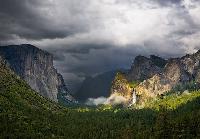
I have seen persons of emotional temperament stand with tearful eyes, spellbound and dumb with awe, as they got their first view of the Valley from Inspiration Point [pictured here], overwhelmed in the sudden presence of the unspeakable, stupendous grandeur, said Galen Clark, the first European American to discover Yosemite in eastern California s Sierra Nevada mountains. And we can thank Clark for pushing legislation that led to the Yosemite Land Grant signed by President Abraham Lincoln in 1864. It was the first time the federal government set aside land for preservation it is generally recognized as the birth of the national parks idea. But beyond the historic significance, Yosemite is indeed a place of unspeakable, stupendous grandeur. Maybe best known for its waterfalls, the park also plays home to hypnotic valleys, ancient giant trees, incredible rock formations, meadows worthy of odes and sonnets, and 750 miles worth of trails from which to explore it all.
22. Galapagos Islands

Anywhere you land in the Galapagos archipelago will be fascinating; the islands and their aquatic environs made famous by Charles Darwin form a national park and a marine reserve, all within the Ecuadorian province of which they are a part. Of the 18 main islands, San Cristobal Island (pictured here) is the easternmost, and the oldest as well. It was formed by the fusion of several volcanoes and it is where Darwin first set foot on the islands. While it is the most populated of all the islands (and serves as a gateway for exploring the archipelago) it also hosts frigate birds, marine iguanas, Galapagos tortoises, blue footed boobies, Galapagos sea lions, swallow tailed seagulls, dolphins and other must see wildlife. But take your pick of any of the islands that comprise this special spot and you will easily find yourself in one of the prettiest and most interesting places in the world.
23. Lavender fields of France
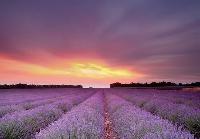
For this one we re also considering the olfactory component, because fields of vibrant flowers in Provence, France are one thing; but add waves of heady lavender fragrance to the setting and it s a slam dunk in the beautiful places department. We can thank the Romans for bringing lavender to France, which they did more than 2,000 years ago. The hillsides and plateaus provided the perfect place for wild lavender to flourish and throughout the Middle Ages the local Provencal inhabitants collected the flowers for natural remedies and cleaning. By the end of the 19th century, increased attention was paid to maintaining and cultivating the lavender, resulting in its thriving position in the economy, culture and fields of the region today. Take a deep breath.
24. Angkor Wat
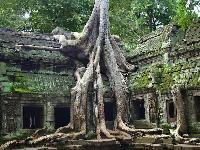
Nestled in the jungles of Cambodia s northern province of Siem Reap, Angkor Wat comprises 155 square miles of what UNESCO calls one of the most important archaeological sites of Southeast Asia. The site was the capital of the Khmer Kingdom, and with its beautifully ornamented temples, hydraulic structures and urban planning, it represents an impressive range of Khmer art from the 9th to 14th centuries. But beyond the beauty of the monuments in general, one of the most striking sights to behold is the way in which the jungle is slowly reclaiming the temple of Ta Prohm. While the other monuments have been protected from the clutches of arboreal exuberance, archeologists have left Ta Prohm to fend for itself. As a result, visitors are graced with the opportunity to see the incredible power of nature. In the contest between architecture and trees, the trees are winning.
25. Big Island

While most people associate Hawaii with the perfect beaches and palm trees brand of beauty, we re taking another tack here; we re adding Big Island to the list for its otherworldly planet turning itself inside out appeal. Pristine Pacific paradises are one thing, but the opportunity to see active volcanoes oozing and spewing lava is a humbling sight. Between 1983 and 2002, lava flows added 543 acres of land mass to the island; how incredible to be able to witness geology in action. (And if you get tired of watching volcanoes, you can always head back to the perfect beaches and palm trees.)
26. Antarctica Southern Ocean
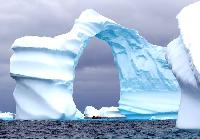
The stark frigid atmosphere of the southern tip of the globe may not be all that hospitable, but its beauty is sublime. Antarctica holds the title as the coldest, windiest and driest continent, with nearly 98 percent of it covered in very deep ice. This all conspires to create stunning landscapes of pure white snow mingling with blue ice in structures of architectural magnificence. Striking as it is though, the land is so forbidding that the sea supports most of the continent s wildlife, which is relatively meager in diversity. There are a number of flying bird species, as well as eight species of penguins, seven species of pennipeds and around 10 species of cetaceans. However, you may be surprised to learn that there are over 100 species of moss, 400 species of lichen forming fungi and over 1,000 species of free living fungi. Heroic life forms, to be sure!
27. Victoria Falls
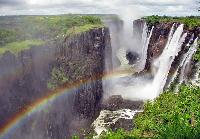
Although 19th century explorer David Livingstone named the magnificent waterfall which separates Zambia and Zimbabwe in honor of Queen Victoria, the indigenous (and much more poetic) name Mosi oa Tunya, which means the smoke that thunders is commonly used and is thankfully recognized by the World Heritage List. While this chronically rainbow creating waterfall is neither the highest nor the widest in the world, it is still considered the world s largest sheet of falling water based on height (354 feet) and width (5,604 feet) combined. It is an exquisite vision, the product of the full width of the Zambezi River 1.25 miles wide here flowing along a basalt plateau, only to suddenly plummet in a single drop into the deep chasm that divides the countries. This wonderful waterfall is considered by many to be the most awe inspiring of all.
28. Tunnel of Love

Ukraine s Tunnel of Love located near the town of Klevin may not be the most dramatic spot on our list, but for the tree loving romantic, it may steal the show. Fortunately, someone decided that train tracks and forests need not be mutually exclusive, and thus, a towering tunnel through the trees has been maintained to allow travel of a train that makes its way through the fairytale passage three times a day. The rest of the time, this arboreal archway which is nearly 2 miles long hosts strolling lovers and is said to seal promises made there if their love is true.
29. Taktsang Palphug Monastery

Also known as the Tiger s Nest, the Taktsang Palphug Monastery can be found near the city of Paro in Bhutan, the small eastern Himalayan country nestled between India and China. The monastery, which is perched on a cliff at an elevation of over 10,000 feet, was built in 1692 at the site of the cave where a guru by the name of Padmasambhava meditated (as the story goes) for three years, three months, three weeks and three hours back in the 8th century. This dream home for hermits remains a great example of Bhutanese architecture, an exquisite jewel tucked into the rugged beauty of its surroundings.
30. Mount Fuji
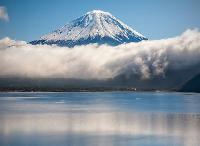
While many of the world s most notable mountains are famed for their imposing drama, Japan s Mount Fuji is a departure from the norm. It doesn t brood; it s serene and contemplative which isn t to say that it doesn t have some personality. At 12,388 feet it is Japan s highest mountain; and although it hasn t erupted since 1707, it is still considered an active volcano. Yet it somehow manages to exude a sense of calm. And if ever a mountain were to be a muse, Mount Fuji would be it. For centuries its form has been a recurring theme in paintings, literature, gardens and other crafts. As UNESCO describes it, the mountain s perfect, snow capped conical form has inspired artists ... to produce images that transcended cultures, allowed the mountain to be known around the world, and had a profound influence on the development of Western art. It remains a potent and sacred symbol of Japan.